- HPLC purity ≥99%, with a COA for each lot on request
- Certificate of analysis tied to your lot number
- Tracked EU delivery, dispatched the next working day
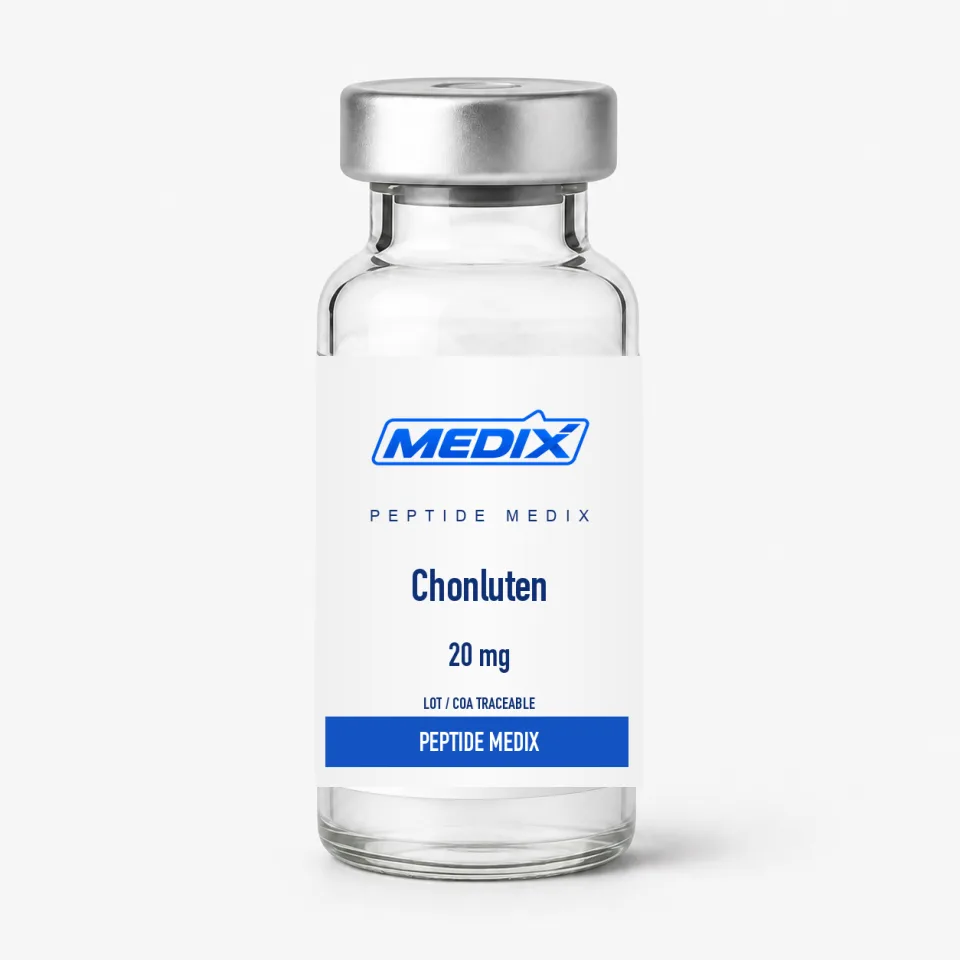
Chonluten
EDG (Glu-Asp-Gly) tripeptide for bronchopulmonary and mucosal research
In stock1 format available
€63
This listing is currently unavailable. Contact us and we will tell you when it is back or suggest an equivalent.
Ask about this listing or request its COA- FormLyophilized powder in a sealed glass vial
- Mol. weight319.27 g/mol
- Research areasAirway epithelium, gastric and intestinal mucosa, irritant-exposure models, gene expression
For laboratory research use only. Sold exclusively for in-vitro laboratory research by qualified professionals. Not for human or veterinary use, and not a medicine, food, cosmetic or dietary supplement. Terms and Conditions
Overview
Key facts
Chonluten is the synthetic tripeptide L-glutamyl-L-aspartyl-glycine (Glu-Asp-Gly, EDG).
- Molecular formula
- C11H17N3O8
- Molecular weight
- 319.27 g/mol
- Amino acid sequence
- Glu-Asp-Gly (EDG), linear tripeptide
- Purity
- ≥99% by HPLC; lot-matched COA available
- Form
- Lyophilized powder in a sealed glass vial
- Storage
- −20 °C, sealed and protected from light and moisture
- Available size
- 20 mg
For research use only. Not for human consumption.
Chonluten is the synthetic tripeptide L-glutamyl-L-aspartyl-glycine (Glu-Asp-Gly, EDG). In the Khavinson short-peptide bioregulator series it is the sequence tied to bronchopulmonary tissue, and part of its literature also deals with the lining of the stomach and intestine. Like the rest of the family, it took the place of an earlier tissue extract once a short active sequence had been pinned down and could be made synthetically to a defined standard.
At 319 g/mol, EDG ranks among the smallest peptides in the series — barely bigger than the dipeptide Vilon. Its C-terminal glycine has no side chain whatsoever, leaving the molecule highly flexible and almost wholly polar. In practice this means EDG dissolves very easily, comes off reversed-phase columns early, and serves as a useful minimum case when researchers ask how much structure a peptide needs before any sequence-specific behaviour can be seen.
Laboratory studies with EDG include bronchial and alveolar epithelial models, gastric mucosa preparations and rodent experiments with inhaled or swallowed irritants, using histology and stress markers as endpoints. We supply Chonluten in a 20 mg lyophilised vial produced by SPPS and HPLC-purified to a ≥99% specification, accompanied by a certificate of analysis for the lot. For laboratory research only.
Specifications
Identity
- Molecular formula
- C11H17N3O8
- Molecular weight
- 319.27 g/mol
- Amino acid sequence
- Glu-Asp-Gly (EDG), linear tripeptide
- Peptide class
- Khavinson short-peptide bioregulator (tripeptide)
Supply & purity
- Form
- Lyophilized powder in a sealed glass vial
- Purity
- ≥99% by HPLC; lot-matched COA available
- Available sizes
- 20 mg
- Solubility
- Bacteriostatic or sterile water; readily soluble in aqueous buffers
Handling & storage
- Storage (lyophilized)
- −20 °C, sealed and protected from light and moisture
- Storage (reconstituted)
- 2–8 °C, protected from light; use within the study window
Additional detail
- Tissue association
- Bronchopulmonary and mucosal peptide preparations
- Research areas
- Airway epithelium, gastric and intestinal mucosa, irritant-exposure models, gene expression
- Sequence relationship
- Shares its acidic Glu-Asp core with Pinealon (EDR) and Ovagen (EDL)
Questions about Chonluten
What is Chonluten?
The synthetic tripeptide Glu-Asp-Gly (EDG) from the Khavinson series of short bioregulator peptides, which that literature links to bronchopulmonary and mucosal tissue. We sell it as a lyophilised research chemical for lab use only.
What documents prove its purity?
Each lot undergoes HPLC testing against a ≥99% specification. On request we send the lot's certificate, which gives the batch code, purity found, identity result and a note on appearance.
What sets it apart from Bronchogen?
Both relate to the respiratory tract, but Chonluten is the shorter EDG tripeptide, whereas Bronchogen is the AEDL tetrapeptide. Chonluten also features in research on gastric and intestinal mucosa — a setting that seldom appears in work on Bronchogen.
Where is the CAS number?
EDG has no widely used CAS entry, so rather than printing something unverifiable we leave that field blank. What defines the material is its sequence, formula and mass, and the lot COA confirms all three.
How do I store Chonluten?
Sealed vials belong in the freezer at −20 °C, protected from light and damp. After reconstitution, a fridge at 2–8 °C is fine for the planned study period; for longer, split it into single-use aliquots and freeze them so no portion is thawed twice.
Related