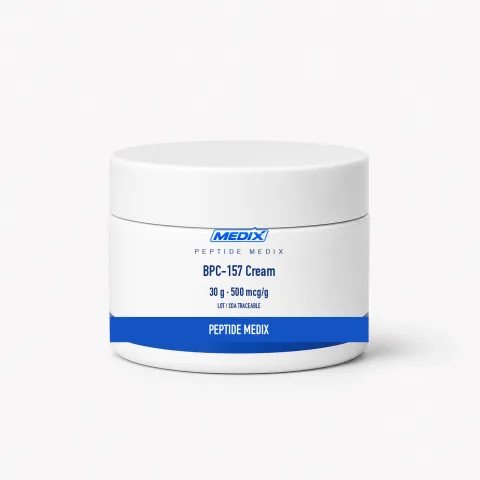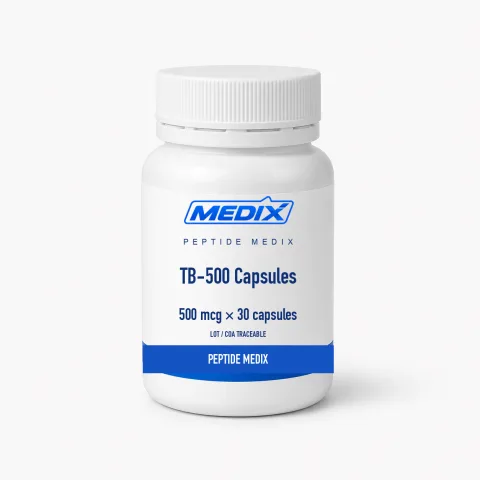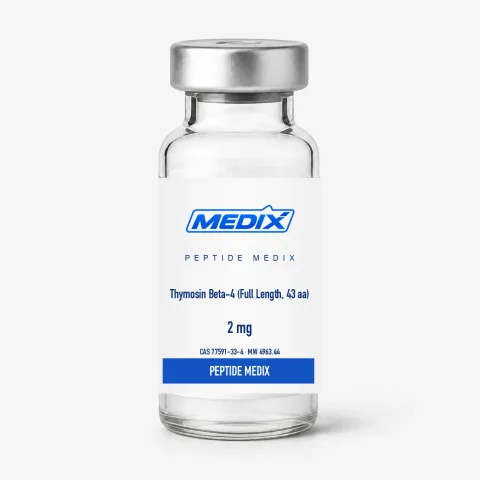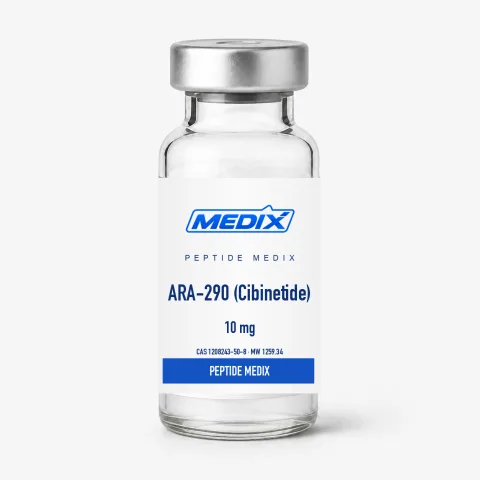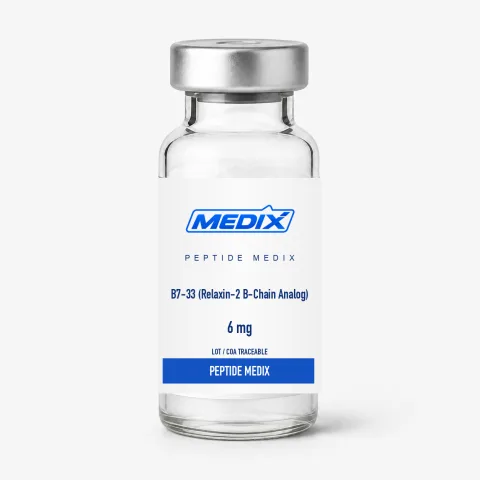
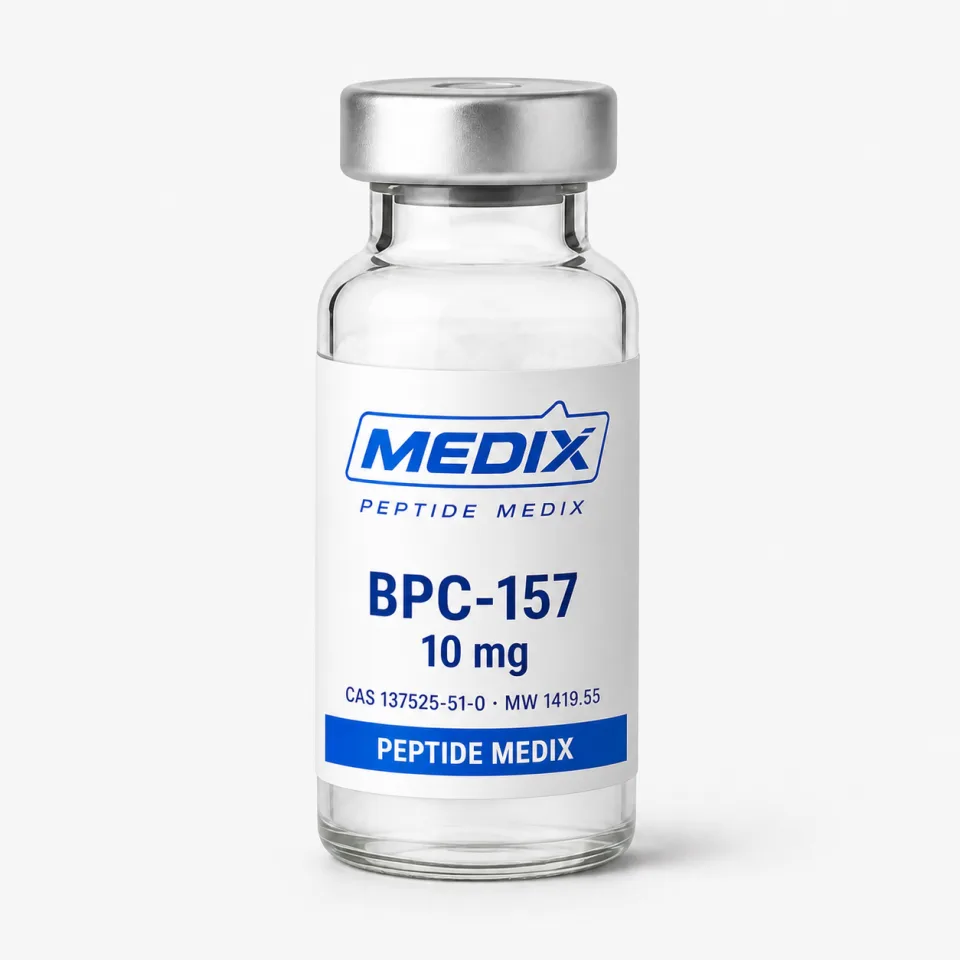
- HPLC purity ≥99%, with a COA for each lot on request
- Certificate of analysis tied to your lot number
- Tracked EU delivery, dispatched the next working day
Tissue Repair & Healing Peptides
BPC-157
Synthetic 15-residue gastric pentadecapeptide in lyophilised research vials
In stock7 formats availableCAS 137525-51-0
€34Range €34 – €522
This listing is currently unavailable. Contact us and we will tell you when it is back or suggest an equivalent.
Ask about this listing or request its COA- FormLyophilized powder, sealed glass vial with crimped stopper
- Mol. weight1419.55 g/mol
- Research areasTendon and ligament repair, GI mucosal integrity, angiogenesis, growth-factor signalling
For laboratory research use only. Sold exclusively for in-vitro laboratory research by qualified professionals. Not for human or veterinary use, and not a medicine, food, cosmetic or dietary supplement. Terms and Conditions
Overview
Key facts
BPC-157 is a synthetic peptide of fifteen amino acids matching part of body protection compound, a cytoprotective protein originally identified in human gastric juice.
- CAS number
- 137525-51-0
- Molecular formula
- C62H98N16O22
- Molecular weight
- 1419.55 g/mol
- Amino acid sequence
- Gly-Glu-Pro-Pro-Pro-Gly-Lys-Pro-Ala-Asp-Asp-Ala-Gly-Leu-Val
- Purity
- ≥99% by HPLC; lot-matched COA available
- Form
- Lyophilized powder, sealed glass vial with crimped stopper
- Storage
- −20 °C, sealed and protected from light and moisture
- Available sizes
- 2 mg · 5 mg · 10 mg · 15 mg · 20 mg · 30 mg · 10-vial kit · 10 x 5 mg
For research use only. Not for human consumption.
BPC-157 is a synthetic peptide of fifteen amino acids matching part of body protection compound, a cytoprotective protein originally identified in human gastric juice. Since its parent protein comes from the stomach lining, the fragment holds up remarkably well in water and acidic conditions compared with most peptides of its size — one reason it features so often in bench and animal-model studies.
Our BPC-157 is made by solid-phase peptide synthesis, purified by reversed-phase HPLC and filled as lyophilised powder into sealed glass vials. Every lot is assayed by HPLC with mass confirmation by mass spectrometry, and the certificate of analysis for your lot is available on request. Choose from 5 mg, 10 mg, 15 mg and 20 mg vials to match the amount you hold to the duration of your study rather than buying more than you need.
What sets this listing apart
BPC-157 – vial, 2/5/10/15/20/30 mg. Lyophilized powder, sealed glass vial with crimped stopper. Other BPC-157 listings differ in format, fill or combination partners; the specification and COA always refer to the listing you order.
Same compound, other listings
Specifications
Identity
- CAS number
- 137525-51-0
- Molecular formula
- C62H98N16O22
- Molecular weight
- 1419.55 g/mol
- Amino acid sequence
- Gly-Glu-Pro-Pro-Pro-Gly-Lys-Pro-Ala-Asp-Asp-Ala-Gly-Leu-Val
- Chain length
- 15 amino acids (pentadecapeptide)
- Peptide class
- Gastric pentadecapeptide, partial sequence of body protection compound
Supply & purity
- Form
- Lyophilized powder, sealed glass vial with crimped stopper
- Purity
- ≥99% by HPLC; lot-matched COA available
- Available sizes
- 2 mg, 5 mg, 10 mg, 15 mg, 20 mg, 30 mg
- Solubility
- Readily soluble in bacteriostatic or sterile water
Handling & storage
- Storage (lyophilized)
- −20 °C, sealed and protected from light and moisture
- Storage (reconstituted)
- 2–8 °C, protected from light, used within the study window
Additional detail
- Research areas
- Tendon and ligament repair, GI mucosal integrity, angiogenesis, growth-factor signalling
Questions about BPC-157
How pure is your BPC-157, and can I see the COA?
Each lot is assayed by reversed-phase HPLC to ≥99% purity, and mass spectrometry confirms the expected molecular mass. You can request the certificate for your lot before or after you order; the lot number on the vial label matches the one on the certificate.
Which vial sizes are available?
We stock BPC-157 in 5 mg, 10 mg, 15 mg and 20 mg vials. The smaller fills suit short pilot runs and method development, whereas 15 mg and 20 mg vials are typically chosen for longer study series where reconstituting many small vials would waste material.
What is the correct storage for BPC-157?
Store unopened lyophilised vials at −20 °C, dry and protected from light; kept this way the powder remains stable for a long time. After reconstitution, refrigerate at 2–8 °C in the dark and use the solution within the planned study period rather than keeping it indefinitely.
What is the difference between BPC-157 and TB-500?
Their sequences are unrelated, though they are studied in overlapping models. BPC-157 comes from a gastric protein and is prominent in gut and tendon research; TB-500 is a short fragment of thymosin beta-4 linked to actin binding and cell migration. Some labs study the two together as a blend.