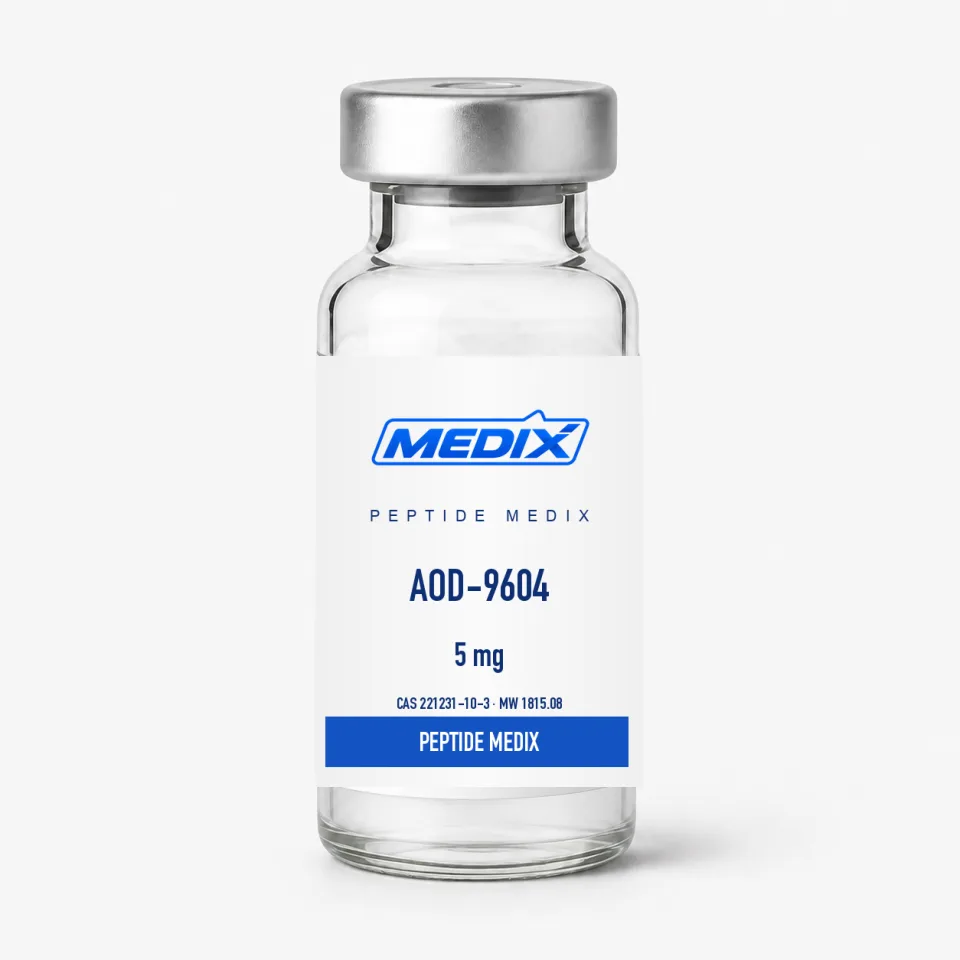
- HPLC purity ≥99%, with a COA for each lot on request
- Certificate of analysis tied to your lot number
- Tracked EU delivery, dispatched the next working day
AOD-9604
Modified hGH 176-191 fragment, a peptide tool for lipolysis studies
In stock2 formats availableCAS 221231-10-3
€63Range €63 – €102
This listing is currently unavailable. Contact us and we will tell you when it is back or suggest an equivalent.
Ask about this listing or request its COA- FormLyophilized powder, sealed glass vial with flip-off seal
- Mol. weight1815.08 g/mol
- Research areasAdipocyte lipolysis, lipogenesis inhibition, metabolic signaling independent of GH receptor
For laboratory research use only. Sold exclusively for in-vitro laboratory research by qualified professionals. Not for human or veterinary use, and not a medicine, food, cosmetic or dietary supplement. Terms and Conditions
Overview
Key facts
AOD-9604 is a synthetic 16-amino-acid peptide taken from the C-terminal end of human growth hormone.
- CAS number
- 221231-10-3
- Molecular formula
- C78H123N23O23S2
- Molecular weight
- 1815.08 g/mol
- Amino acid sequence
- Tyr-Leu-Arg-Ile-Val-Gln-Cys-Arg-Ser-Val-Glu-Gly-Ser-Cys-Gly-Phe
- Purity
- ≥99% by HPLC; lot-matched COA available
- Form
- Lyophilized powder, sealed glass vial with flip-off seal
- Storage
- −20 °C, sealed and protected from light and moisture
- Available sizes
- 5 mg · 10 mg
For research use only. Not for human consumption.
AOD-9604 is a synthetic 16-amino-acid peptide taken from the C-terminal end of human growth hormone. It corresponds to the hGH 177-191 fragment with an extra tyrosine at the N-terminus, and it keeps the internal disulfide link between its two cysteines that locks the fragment into the loop shape linked to its reported effects. Researchers singled out this stretch because growth hormone's fat-mobilising region seems to be structurally distinct from the parts responsible for receptor-driven growth signalling.
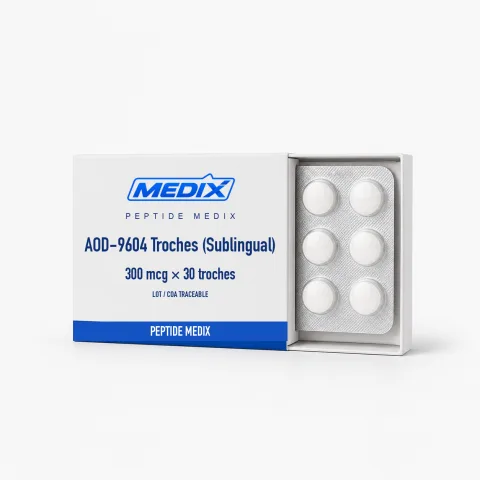
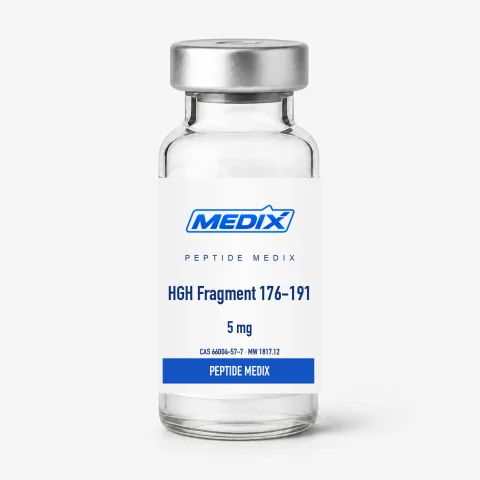
The appeal for research is the idea that this region can be studied apart from growth hormone's receptor-mediated actions. In fat cells and adipose tissue, studies quantify lipolysis, lipogenic enzyme activity and interplay with beta-adrenergic stimulation, while rodent work has examined fat mass without the rise in IGF-1 that intact growth hormone produces. We list three products covering this region, and they cannot be swapped for one another: HGH Fragment 176-191 is the unmodified sequence; AOD-9604 carries the extra N-terminal tyrosine plus the Cys7-Cys15 bridge, altering its molecular formula and reversed-phase retention; and the sublingual troche delivers the cyclised peptide by another route. Vials hold 5 mg or 10 mg; note that reducing agents in buffer will break the disulfide.
What sets this listing apart
AOD-9604 – vial, 5/10 mg. Lyophilized powder, sealed glass vial with flip-off seal. Other AOD-9604 listings differ in format, fill or combination partners; the specification and COA always refer to the listing you order.
Same compound, other listings
Specifications
Identity
- CAS number
- 221231-10-3
- Molecular formula
- C78H123N23O23S2
- Molecular weight
- 1815.08 g/mol
- Amino acid sequence
- Tyr-Leu-Arg-Ile-Val-Gln-Cys-Arg-Ser-Val-Glu-Gly-Ser-Cys-Gly-Phe
- Peptide class
- Growth hormone C-terminal fragment analog (hGH 176-191 series)
Supply & purity
- Form
- Lyophilized powder, sealed glass vial with flip-off seal
- Purity
- ≥99% by HPLC; lot-matched COA available
- Available sizes
- 5 mg, 10 mg
- Solubility
- Bacteriostatic water; sterile water and dilute acetic acid also reported
Handling & storage
- Storage (lyophilized)
- −20 °C, sealed and protected from light and moisture
- Storage (reconstituted)
- 2–8 °C, protected from light; use within the study window
Additional detail
- Disulfide bridge
- Cys7-Cys15, cyclized
- Research areas
- Adipocyte lipolysis, lipogenesis inhibition, metabolic signaling independent of GH receptor
Questions about AOD-9604
What distinguishes AOD-9604 from HGH Fragment 176-191?
Both contain the same central C-terminal stretch of growth hormone, but AOD-9604 is the cyclised variant with an added tyrosine and a Cys7-Cys15 disulfide. The difference is visible in the molecular formula and in reversed-phase retention, and many labs run the two head to head.
Which purity data and documents are included?
Each lot is assayed by HPLC to ≥99%, with identity confirmed by mass spectrometry, and its certificate of analysis can be requested. The COA refers to the vial number you receive, so the purity data map onto your own material.
Why should reducing agents be avoided?
The Cys7–Cys15 disulfide keeps the fragment cyclic. A reducing agent in the buffer breaks that bond and leaves a linear peptide that behaves differently in chromatography and in biological assays, which muddies the results.
What are the storage requirements?
Keep the unopened lyophilised vial at −20 °C, shielded from light and humidity. Once reconstituted, refrigerate at 2–8 °C in the dark and finish it within the period set in your protocol. Aliquot to prevent repeated freezing and thawing.
Related