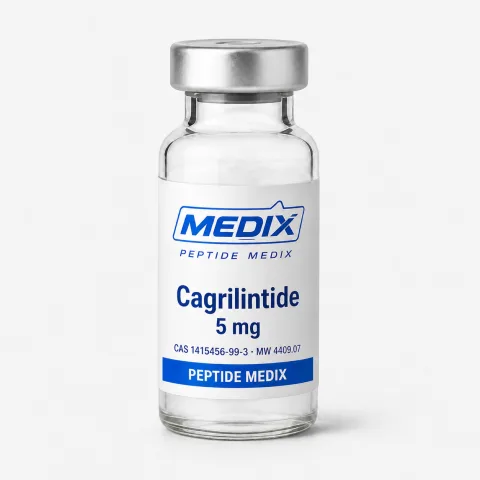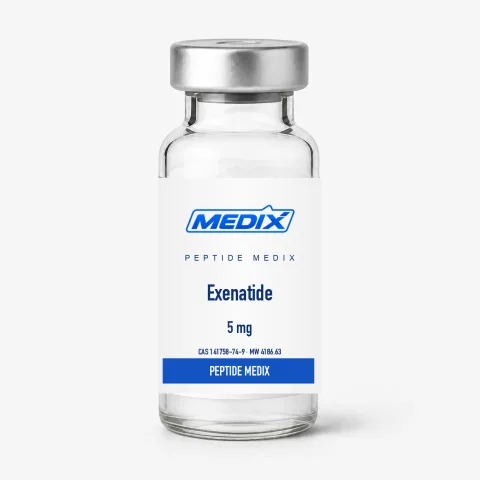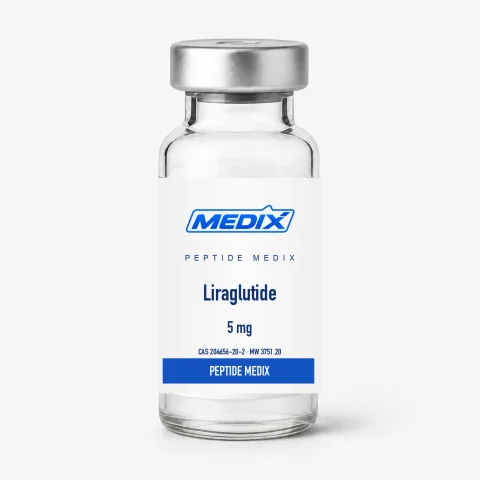
- HPLC purity ≥99%, with a COA for each lot on request
- Certificate of analysis tied to your lot number
- Tracked EU delivery, dispatched the next working day
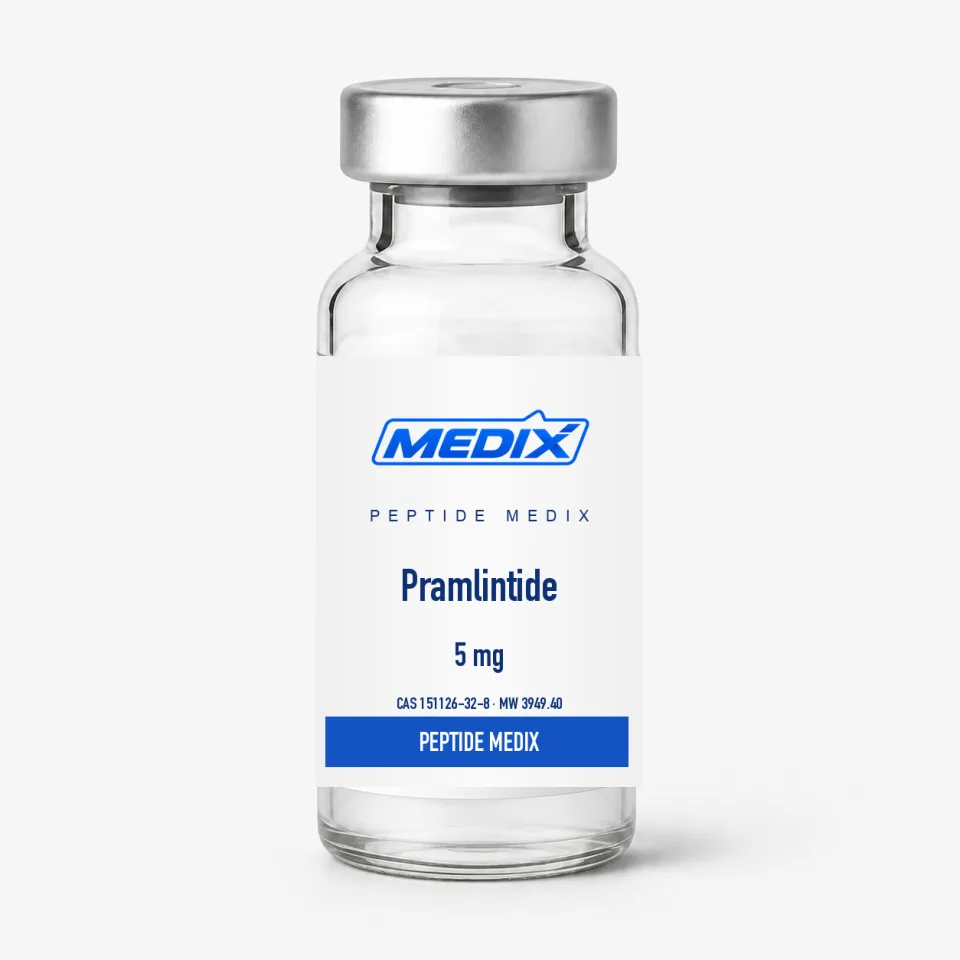
Pramlintide
Synthetic 37-amino-acid amylin analogue for islet-hormone research
In stock2 formats availableCAS 151126-32-8
€97Range €97 – €165
This listing is currently unavailable. Contact us and we will tell you when it is back or suggest an equivalent.
Ask about this listing or request its COA- FormLyophilized powder, sealed glass vial with flip-off seal
- Mol. weight3949.40 g/mol
- Research areasIslet hormone signalling, gastric emptying, glucagon regulation, satiety and food-intake models
For laboratory research use only. Sold exclusively for in-vitro laboratory research by qualified professionals. Not for human or veterinary use, and not a medicine, food, cosmetic or dietary supplement. Terms and Conditions
Overview
Key facts
Pramlintide is a lab-made version of human amylin — the peptide, also called islet amyloid polypeptide, that beta cells release together with insulin — and like amylin it is 37 amino acids long.
- CAS number
- 151126-32-8
- Molecular weight
- 3949.40 g/mol
- Amino acid sequence
- Lys-Cys-Asn-Thr-Ala-Thr-Cys-Ala-Thr-Gln-Arg-Leu-Ala-Asn-Phe-Leu-Val-Hi…
- Purity
- ≥99% by HPLC; lot-matched COA available
- Form
- Lyophilized powder, sealed glass vial with flip-off seal
- Storage
- −20 °C, sealed and protected from light and moisture
- Available sizes
- 5 mg · 10 mg
For research use only. Not for human consumption.
Pramlintide is a lab-made version of human amylin — the peptide, also called islet amyloid polypeptide, that beta cells release together with insulin — and like amylin it is 37 amino acids long. Natural human amylin is tricky to work with because it quickly clumps into amyloid fibres. Pramlintide puts proline in three positions (25, 28 and 29), copying the sequence of rat amylin, which never forms fibres; the result is a soluble molecule that is far easier to handle yet still activates amylin receptors.
It keeps the defining features of the amylin family: a disulfide bond joining the two cysteines close to the start of the chain, and a tyrosine at the end carrying an amide — both needed for binding the receptor. Calculated mass 3949.40 g/mol; CAS number 151126-32-8. We make it by solid-phase synthesis, purify it by reversed-phase HPLC to ≥99% and supply it freeze-dried in sealed vials of 5 mg or 10 mg, each lot with its certificate of analysis.
Specifications
Identity
- CAS number
- 151126-32-8
- Molecular weight
- 3949.40 g/mol
- Amino acid sequence
- Lys-Cys-Asn-Thr-Ala-Thr-Cys-Ala-Thr-Gln-Arg-Leu-Ala-Asn-Phe-Leu-Val-His-Ser-Ser-Asn-Asn-Phe-Gly-Pro-Ile-Leu-Pro-Pro-Thr-Asn-Val-Gly-Ser-Asn-Thr-Tyr-NH2
- Chain length
- 37 amino acids, single chain
- Peptide class
- Synthetic amylin (islet amyloid polypeptide) analog
Supply & purity
- Form
- Lyophilized powder, sealed glass vial with flip-off seal
- Purity
- ≥99% by HPLC; lot-matched COA available
- Available sizes
- 5 mg, 10 mg
- Solubility
- Bacteriostatic water and mildly acidic aqueous buffers; solubility falls near neutral pH
Handling & storage
- Storage (lyophilized)
- −20 °C, sealed and protected from light and moisture
- Storage (reconstituted)
- 2–8 °C, protected from light; use within the study window
Additional detail
- Key modifications
- Pro substitutions at 25, 28 and 29; Cys2–Cys7 disulfide bridge; C-terminal amide
- Molecular target
- Amylin receptors — calcitonin receptor in complex with RAMP1, RAMP2 or RAMP3
- Research areas
- Islet hormone signalling, gastric emptying, glucagon regulation, satiety and food-intake models
Questions about Pramlintide
What is pramlintide?
A synthetic 37-residue version of human amylin, the hormone beta cells release with insulin. Three prolines borrowed from the rat sequence prevent it from forming amyloid fibrils, so it stays dissolved and behaves predictably in experiments.
How does it differ from GLP-1 analogues like semaglutide?
They use separate receptor families. Semaglutide switches on the GLP-1 receptor, while pramlintide works through amylin receptors — the calcitonin receptor combined with a receptor activity-modifying protein (RAMP). Labs frequently test the two in parallel, or together, to tell the pathways apart.
Why is it more stable than human amylin?
Human amylin forms fibres so fast that its concentration and activity can't be relied on during an assay. Prolines in positions 25, 28 and 29 break up the stacking of beta sheets that drives this clumping — the same arrangement found in rat amylin, which stays soluble.
How is purity confirmed, and is there a COA?
HPLC (reversed-phase) shows at least 99% purity for each lot, and mass spectrometry confirms the expected 3949.40 g/mol. You can request the certificate matching your vial's lot number either before you order or once it has arrived.
Which vial size should I pick?
5 mg works well for assay development, receptor-binding studies or a brief pilot; 10 mg means fewer vials to open in longer or multi-arm studies — and fewer openings mean fewer reconstitutions and less variation between preparations.
What are the storage requirements?
Freeze the unopened vial at −20 °C, protected from light and damp. Once dissolved, laboratories refrigerate it (2–8 °C) and finish it within the study period they have planned, dividing it into portions so it doesn't go through freeze–thaw cycles again and again.
Related