- HPLC purity ≥99%, documented per lot
- Certificate of analysis tied to your lot number
- Tracked EU delivery, dispatched the next working day
Gonadorelin
Synthetic GnRH — the unmodified hypothalamic decapeptide
In stock3 formats availableCAS 33515-09-2
€38Range €38 – €97
This listing is currently unavailable. Contact us and we will tell you when it is back or suggest an equivalent.
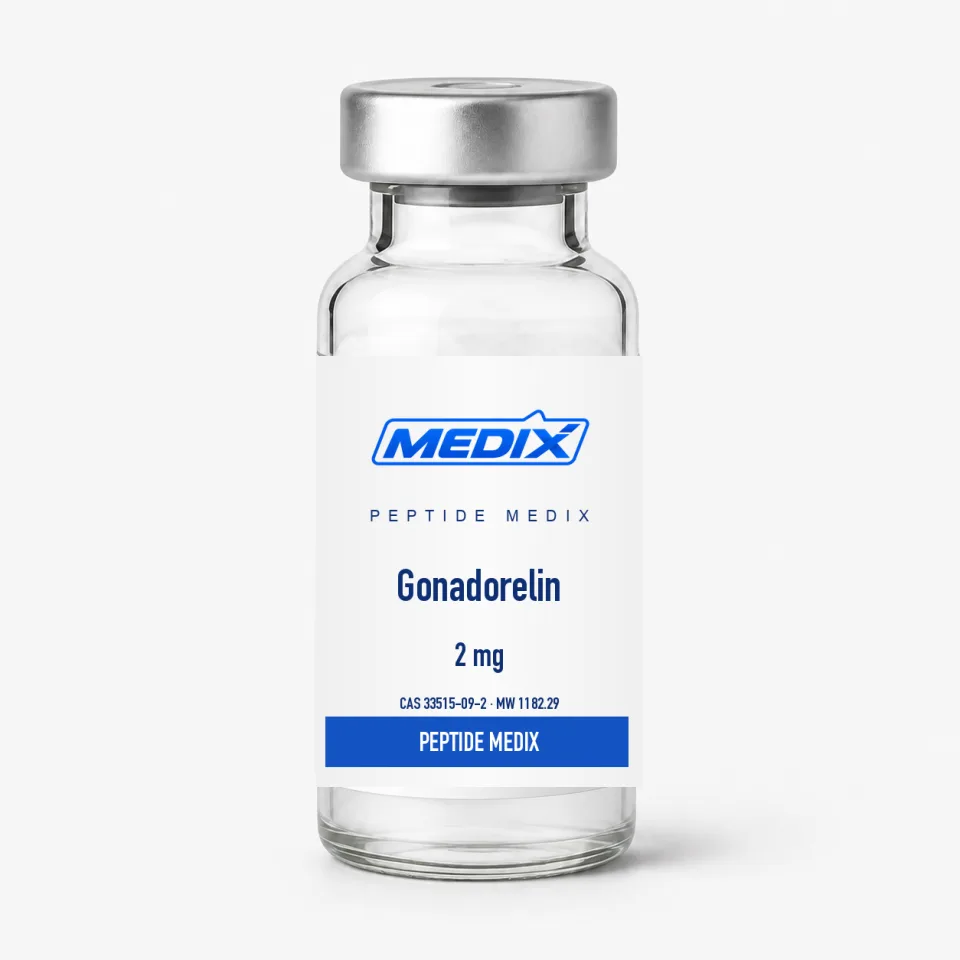
Ask about this listing or request its COA- FormLyophilized white powder, sealed glass vial
- Mol. weight1182.29 g/mol
- Research areasHPG-axis regulation, pulsatile versus continuous receptor signalling, gonadotroph physiology
For laboratory research use only. Sold exclusively for in-vitro laboratory research by qualified professionals. Not for human or veterinary use, and not a medicine, food, cosmetic or dietary supplement. Terms and Conditions
Overview
Key facts
Gonadorelin is synthetic gonadotropin-releasing hormone in its native form — the decapeptide itself rather than an analogue.
- CAS number
- 33515-09-2
- Molecular formula
- C55H75N17O13
- Molecular weight
- 1182.29 g/mol
- Amino acid sequence
- pGlu-His-Trp-Ser-Tyr-Gly-Leu-Arg-Pro-Gly-NH2
- Purity
- ≥99% by HPLC; lot-matched COA
- Form
- Lyophilized white powder, sealed glass vial
- Storage
- −20 °C, desiccated and protected from light
- Available sizes
- 2 mg · 5 mg · 10 mg
For research use only. Not for human consumption.
Gonadorelin is synthetic gonadotropin-releasing hormone in its native form — the decapeptide itself rather than an analogue. Its sequence, pGlu-His-Trp-Ser-Tyr-Gly-Leu-Arg-Pro-Gly-NH2, matches the hypothalamic hormone isolated and characterised by Schally and Guillemin, whose work earned the 1977 Nobel Prize. An N-terminal pyroglutamate and a C-terminal amide shield it against exopeptidases, yet it is still eliminated rapidly, with a half-life in the circulation of only minutes.
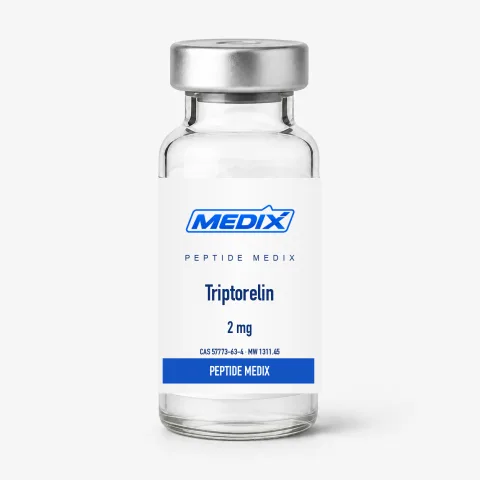
In research that short half-life is an asset, not a flaw. Hypothalamic neurons release GnRH in discrete bursts, and pituitary gonadotrophs respond to that rhythm rather than to the average level. Pulsed stimulation keeps luteinising hormone and follicle-stimulating hormone flowing, while constant exposure downregulates and desensitises the GnRH receptor and eventually shuts gonadotropin release down. Because gonadorelin is cleared so quickly, it is the obvious tool for mimicking physiological pulsatility — the opposite of long-acting analogues like triptorelin.
Specifications
Identity
- CAS number
- 33515-09-2
- Molecular formula
- C55H75N17O13
- Molecular weight
- 1182.29 g/mol
- Amino acid sequence
- pGlu-His-Trp-Ser-Tyr-Gly-Leu-Arg-Pro-Gly-NH2
- Peptide class
- Linear amidated decapeptide; hypothalamic releasing hormone
Supply & purity
- Form
- Lyophilized white powder, sealed glass vial
- Purity
- ≥99% by HPLC; lot-matched COA
- Available sizes
- 2 mg, 5 mg, 10 mg
- Solubility
- Soluble in water and bacteriostatic water; dilute acetic acid assists difficult lots
Handling & storage
- Storage (lyophilized)
- −20 °C, desiccated and protected from light
- Storage (reconstituted)
- 2–8 °C for short-term use; aliquot and freeze for longer holds
Additional detail
- Receptor target
- GnRH receptor (GnRHR) on pituitary gonadotrophs, Gq/11-coupled
- Research areas
- HPG-axis regulation, pulsatile versus continuous receptor signalling, gonadotroph physiology
Questions about Gonadorelin
Are gonadorelin and GnRH identical?
Yes. Gonadorelin is synthetic gonadotropin-releasing hormone with the natural, unmodified decapeptide sequence. Analogues such as triptorelin or leuprolide contain substitutions that prolong their half-life; gonadorelin has none, so it disappears within minutes and behaves differently in experiments.
Why does pulsed versus continuous exposure make such a difference?
Gonadotrophs respond to the timing pattern of GnRH, not merely its level. Intermittent pulses maintain LH and FSH secretion, whereas continuous exposure downregulates and desensitises the receptor and suppresses release. Most experimental designs in this field are built around that distinction.
How does it compare with Kisspeptin-10?
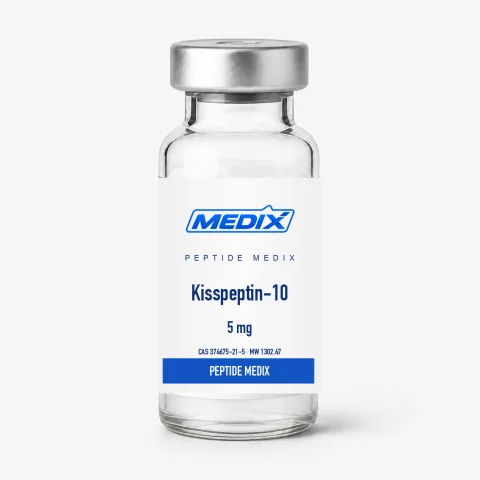
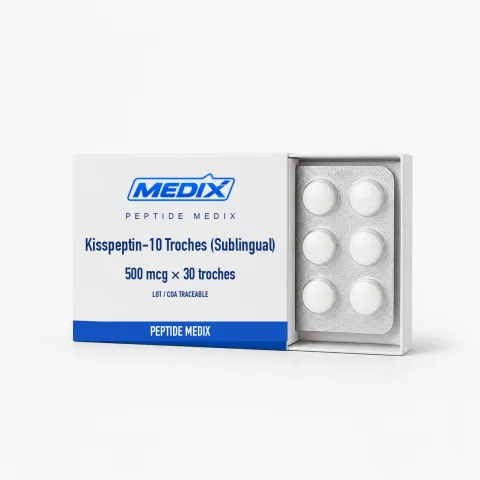
They work at different points of one axis. Kisspeptin-10 activates GnRH neurons through KISS1R, a step further upstream, while gonadorelin acts straight on pituitary GnRH receptors. Using both helps researchers pinpoint where in the cascade an effect arises.
Do you provide a certificate of analysis?
Yes. Each lot is characterised by reverse-phase HPLC (≥99% purity) and mass spectrometry (identity), and the COA for your lot can be requested. The batch number on the vial matches the document, so results remain traceable to a defined analysis.
Which vial sizes are available?
2 mg, 5 mg and 10 mg. Since receptor assays generally use low working concentrations, the 2 mg vial is enough for many studies; the larger sizes suit long series in which keeping one lot throughout eliminates batch variability.
How do I reconstitute and store it?
Add sterile or bacteriostatic water slowly down the side of the vial and swirl gently. Store unopened vials at −20 °C, dry and dark. Reconstituted solution is fine at 2–8 °C for short-term use; for longer periods, aliquot and freeze so it is not thawed repeatedly.