- HPLC purity ≥99%, with a COA for each lot on request
- Certificate of analysis tied to your lot number
- Tracked EU delivery, dispatched the next working day
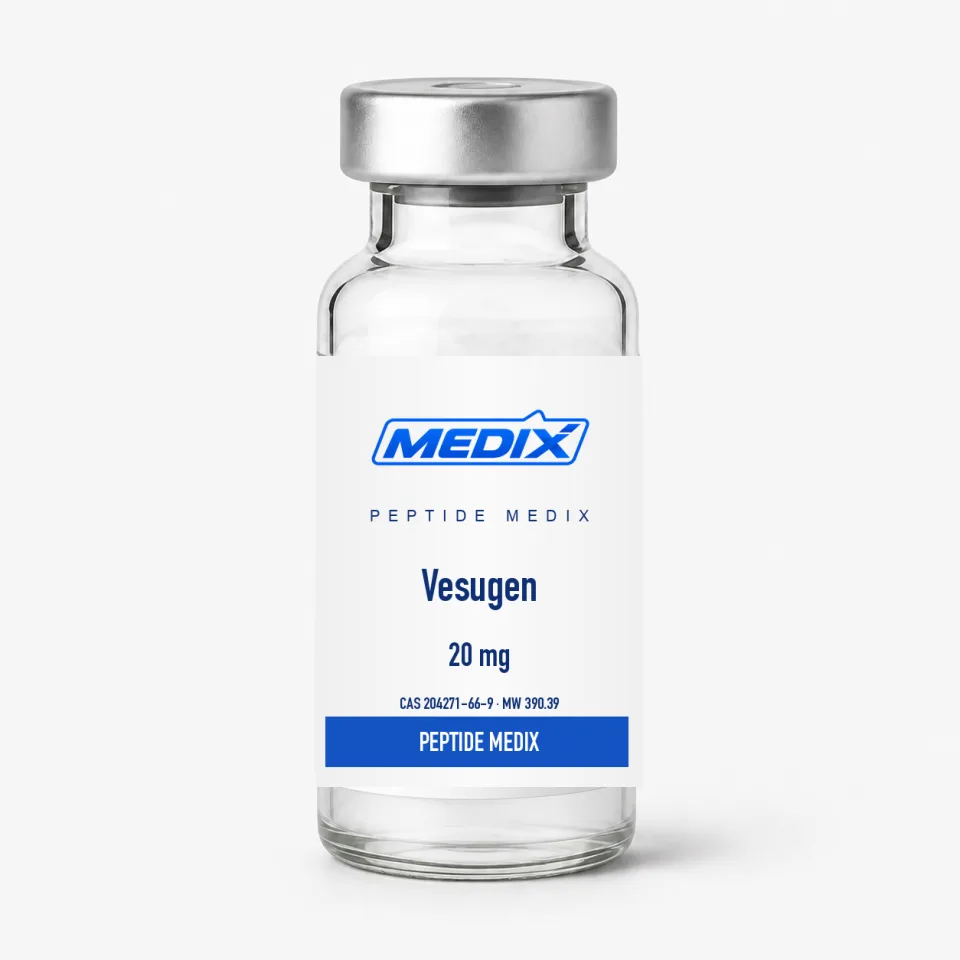
Vesugen
KED (Lys-Glu-Asp) bioregulator tripeptide for research in vascular models
In stock1 format availableCAS 204271-66-9
€63
This listing is currently unavailable. Contact us and we will tell you when it is back or suggest an equivalent.
Ask about this listing or request its COA- FormLyophilized powder in a sealed glass vial
- Mol. weight390.39 g/mol
- Research areasEndothelial cell models, vascular tissue, gene expression, vascular ageing
For laboratory research use only. Sold exclusively for in-vitro laboratory research by qualified professionals. Not for human or veterinary use, and not a medicine, food, cosmetic or dietary supplement. Terms and Conditions
Overview
Key facts
Vesugen is a three-amino-acid peptide made in the lab from lysine, glutamic acid and aspartic acid — written Lys-Glu-Asp, or KED for short.
- CAS number
- 204271-66-9
- Molecular formula
- C15H26N4O8
- Molecular weight
- 390.39 g/mol
- Amino acid sequence
- Lys-Glu-Asp (KED), linear tripeptide with free N- and C-termini
- Purity
- ≥99% by HPLC; lot-matched COA available
- Form
- Lyophilized powder in a sealed glass vial
- Storage
- −20 °C, sealed and protected from light and moisture
- Available size
- 20 mg
For research use only. Not for human consumption.
Vesugen is a three-amino-acid peptide made in the lab from lysine, glutamic acid and aspartic acid — written Lys-Glu-Asp, or KED for short. In Khavinson's series of short bioregulator peptides it is the one assigned to blood vessels. It grew out of earlier preparations taken from the walls of blood vessels, which were later narrowed down to a single defined tripeptide that can be made synthetically and analysed exactly.
KED is Vilon (the dipeptide KE) with one aspartate added, which gives it a second free acid group and a more negative charge at the pH of the body. That is part of what interests structural chemists: the series provides a set of close relatives that each differ by a single amino acid, so researchers can test how small changes in sequence alter reported preferences for binding DNA or targets on the cell surface.
In the lab, Vesugen is used on cultures of endothelial cells (the lining of blood vessels), on isolated vessels, and in rodent studies that measure vessel tone, gene expression in the vessel lining and how vessel walls change with age. It comes as a 20 mg freeze-dried vial made by solid-phase synthesis, HPLC-purified against a ≥99% specification and accompanied by the certificate for its lot. Laboratory research only.
Specifications
Identity
- CAS number
- 204271-66-9
- Molecular formula
- C15H26N4O8
- Molecular weight
- 390.39 g/mol
- Amino acid sequence
- Lys-Glu-Asp (KED), linear tripeptide with free N- and C-termini
- Peptide class
- Khavinson short-peptide bioregulator (tripeptide)
Supply & purity
- Form
- Lyophilized powder in a sealed glass vial
- Purity
- ≥99% by HPLC; lot-matched COA available
- Available sizes
- 20 mg
- Solubility
- Bacteriostatic or sterile water; readily soluble in aqueous buffers
Handling & storage
- Storage (lyophilized)
- −20 °C, sealed and protected from light and moisture
- Storage (reconstituted)
- 2–8 °C, protected from light; use within the study window
Additional detail
- Tissue association
- Vascular and vessel-wall peptide preparations
- Research areas
- Endothelial cell models, vascular tissue, gene expression, vascular ageing
Questions about Vesugen
What is Vesugen?
KED — the synthetic Lys-Glu-Asp tripeptide — from Khavinson's family of short bioregulators, where it is associated with vascular tissue. It is sold as a lyophilised research chemical solely for laboratory investigation.
At what purity is it supplied?
≥99%, checked by HPLC on every lot. The certificate for your lot gives batch number, purity result, identity confirmation and a description of the powder.
How does Vesugen compare with Vilon?
Vesugen is Vilon's Lys-Glu plus one extra aspartate. That single addition changes three things — how heavy the molecule is, what net charge it carries at neutral pH, and which tissue the original studies associate it with — and that's why the two are frequently tested against each other.
What storage does the vial need?
Keep unopened vials in the freezer (−20 °C), away from light and moisture. Once dissolved, store it in the fridge (2–8 °C) for as long as your planned study runs, or freeze portions for single use if it must last longer.
Which solvent is normally used?
Bacteriostatic or sterile water — it dissolves easily in aqueous media. Any further buffer choice depends on your assay and should be checked for pH and ionic-strength compatibility.