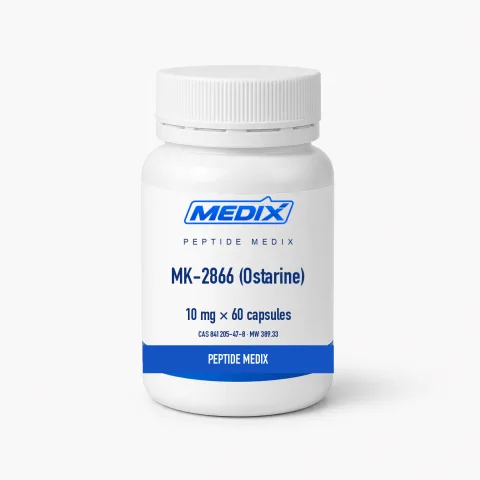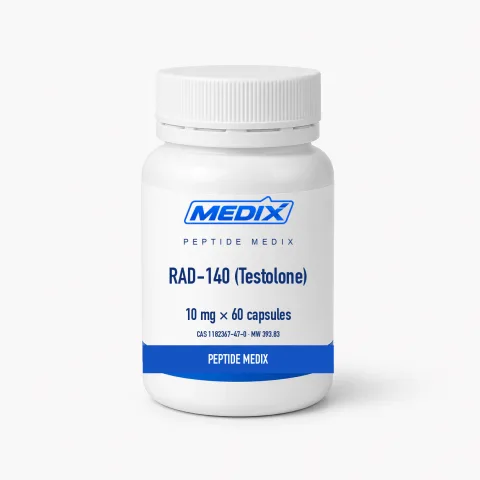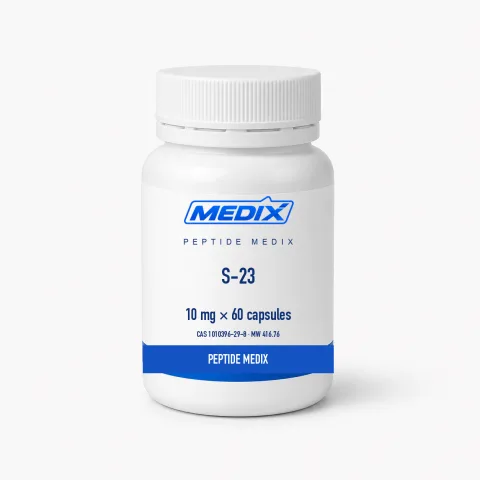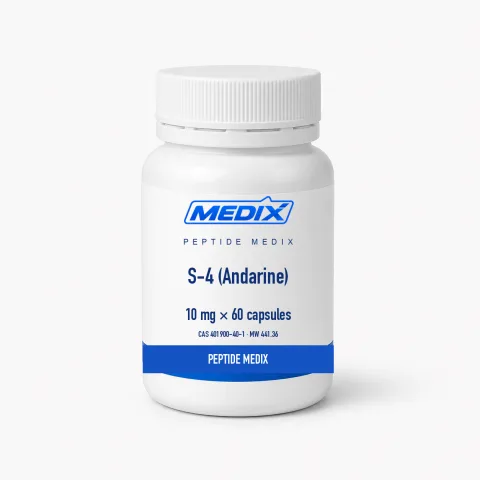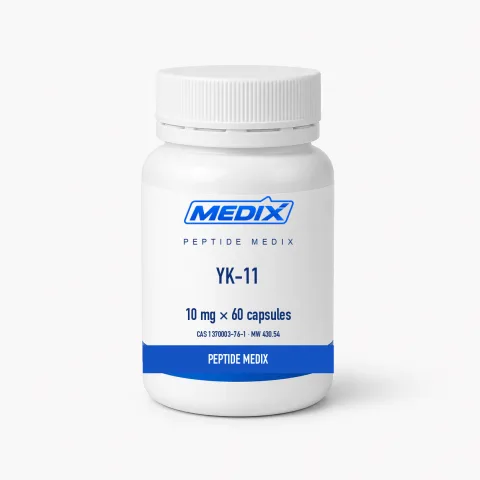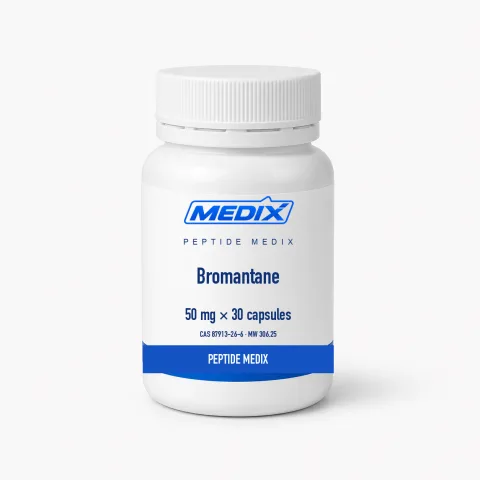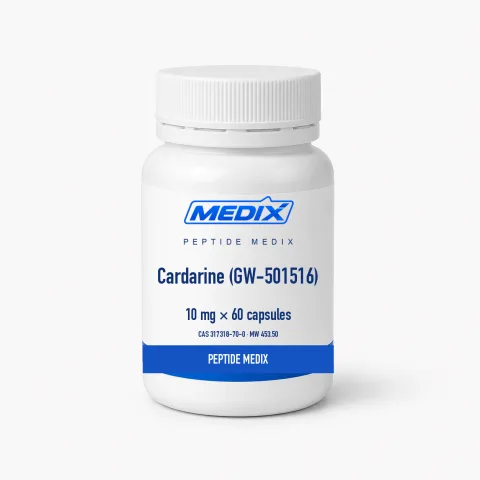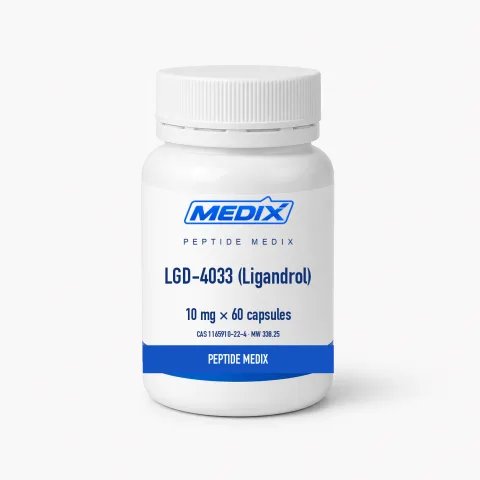
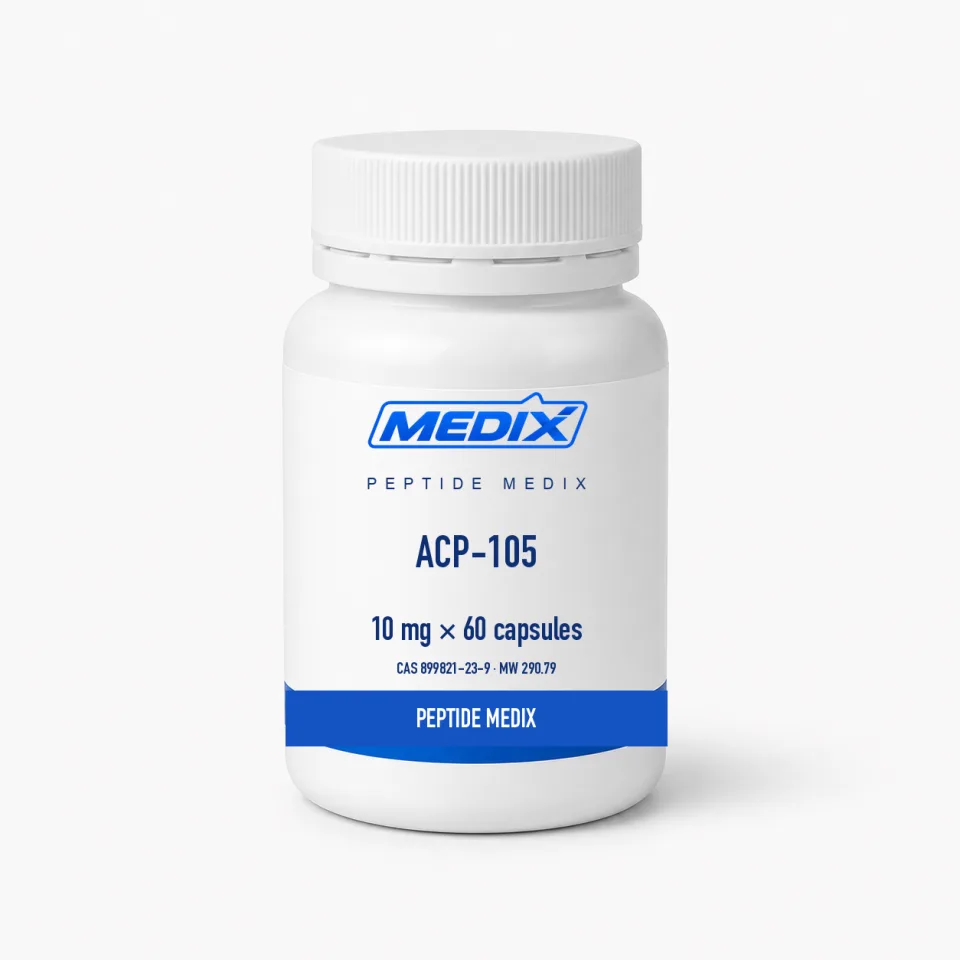
- HPLC purity ≥98%, with a COA for each lot on request
- Certificate of analysis tied to your lot number
- Tracked EU delivery, dispatched the next working day
ACP-105
Non-steroidal SARM (selective androgen receptor modulator) for lab research
In stock2 formats availableCAS 899821-23-9
€55Range €55 – €68
This listing is currently unavailable. Contact us and we will tell you when it is back or suggest an equivalent.
Ask about this listing or request its COA- FormOral-format capsules in a sealed bottle with desiccant, or a 30 mL research liquid in a dropper bottle
- Mol. weight290.79 g/mol
- Research areasAR binding and transactivation assays, muscle and bone tissue selectivity, prostate-sparing profiles, rodent cognition and behaviour
For laboratory research use only. Sold exclusively for in-vitro laboratory research by qualified professionals. Not for human or veterinary use, and not a medicine, food, cosmetic or dietary supplement. Terms and Conditions
Overview
Key facts
ACP-105 is a compact non-steroidal compound (CAS 899821-23-9, molecular mass around 290.8 g/mol) that emerged from selective androgen receptor modulator programmes.
- CAS number
- 899821-23-9
- Molecular weight
- 290.79 g/mol
- Purity
- ≥98% by HPLC; lot-matched COA available
- Form
- Oral-format capsules in a sealed bottle with desiccant, or a 30 mL research liquid in a dropper bottle
- Storage
- Room temperature, sealed, away from light, heat and humidity; refrigeration extends liquid stability
- Available sizes
- 10 mg · 60 capsules · 30 mL liquid · 20 mg/mL
For research use only. Not for human consumption.
ACP-105 is a compact non-steroidal compound (CAS 899821-23-9, molecular mass around 290.8 g/mol) that emerged from selective androgen receptor modulator programmes. It is neither a peptide nor a steroid: a small synthetic organic molecule with a bicyclic amine core, it engages the androgen receptor without the four-ring steroid skeleton found in testosterone and its derivatives.
What shapes its laboratory use is partial agonism. Even at saturating concentrations a partial agonist drives only a submaximal transactivation signal, and when a full agonist is present it can act as an antagonist — which makes such compounds better suited to studying receptor conformation and coregulator recruitment than to chasing the biggest response. The literature covers androgen receptor binding and transactivation assays, comparisons of tissue selectivity between muscle, bone and prostate, and rodent studies of cognition and behaviour. Limited solubility is the key practical issue: prepare stocks in DMSO or ethanol, dilute into medium, and keep the vehicle concentration identical in every well. A 30 mL solution at 20 mg/mL is offered for workflows where volumetric dilution beats repeated weighing of powder.
Specifications
Identity
- CAS number
- 899821-23-9
- Molecular weight
- 290.79 g/mol
Supply & purity
- Form
- Oral-format capsules in a sealed bottle with desiccant, or a 30 mL research liquid in a dropper bottle
- Purity
- ≥98% by HPLC; lot-matched COA available
- Available sizes
- 10 mg × 60 capsules; 30 mL liquid at 20 mg/mL
- Solubility
- Poorly water-soluble; powder stocks are typically prepared in DMSO or ethanol, and the research liquid uses a solvent carrier
Additional detail
- Compound class
- Non-steroidal selective androgen receptor modulator (SARM)
- Molecular target
- Androgen receptor (NR3C4), a nuclear hormone receptor
- Reported activity
- Partial agonist at the androgen receptor in reported assay work
- Structural note
- Compact synthetic organic molecule with a bicyclic amine core; contains no steroid ring system and no amide backbone
- Research areas
- AR binding and transactivation assays, muscle and bone tissue selectivity, prostate-sparing profiles, rodent cognition and behaviour
- Regulatory status
- Not approved by FDA or EMA for any indication; SARMs are not lawful dietary ingredients in the United States
- Sport status
- Prohibited at all times under the WADA anabolic agents category (S1.2)
- Storage
- Room temperature, sealed, away from light, heat and humidity; refrigeration extends liquid stability
Questions about ACP-105
Does ACP-105 have a peptide structure?
No. It is a small non-steroidal organic compound of about 291 g/mol with no amino acid backbone at all. It sits in the selective androgen receptor modulator class, which has no chemical relationship to the peptides we sell, even if buyers often browse the two side by side.
What distinguishes it from RAD-140 or LGD-4033?
All three bind the androgen receptor without a steroid skeleton, yet their chemistry and published pharmacology diverge. ACP-105 is considerably smaller and is reported as a partial agonist, while RAD-140 and LGD-4033 usually behave as stronger full or near-full agonists in the assays described.
What documentation confirms purity?
Every lot is HPLC-tested to a minimum of 98% and comes with a certificate of analysis for that lot, including identity confirmation. Give us the lot number on your bottle when you request it. For a compound class sold widely outside regulated channels, verifying material yourself before assays is sensible.
May ACP-105 be purchased legally?
We supply it strictly as a research chemical for laboratory work. It is not an authorised medicinal product and may not be sold as a food or supplement ingredient in the EU. Each buyer must make sure their purchase and use comply with the rules of their own jurisdiction.
Related