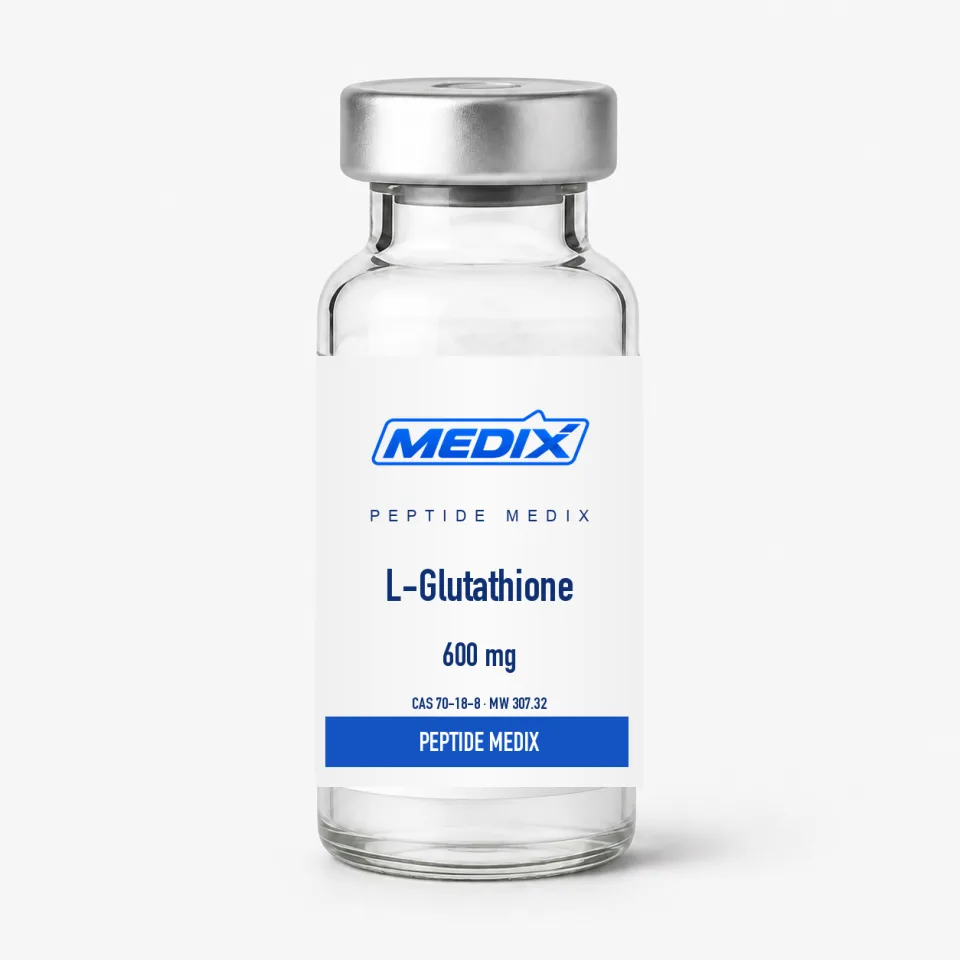
- HPLC purity ≥99%, documented per lot
- Certificate of analysis tied to your lot number
- Tracked EU delivery, dispatched the next working day
L-Glutathione
Reduced L-glutathione tripeptide in 600 mg and 1500 mg research vials
In stock2 formats availableCAS 70-18-8
€76Range €76 – €153
This listing is currently unavailable. Contact us and we will tell you when it is back or suggest an equivalent.
Ask about this listing or request its COA- FormLyophilized powder, sealed glass vial
- Mol. weight307.32 g/mol
- Research areasRedox homeostasis, glutathione peroxidase and S-transferase assays, oxidative stress, melanogenesis
For laboratory research use only. Sold exclusively for in-vitro laboratory research by qualified professionals. Not for human or veterinary use, and not a medicine, food, cosmetic or dietary supplement. Terms and Conditions
Overview
Key facts
L-Glutathione (GSH) is the reduced tripeptide gamma-L-glutamyl-L-cysteinyl-glycine.
- CAS number
- 70-18-8
- Molecular formula
- C10H17N3O6S
- Molecular weight
- 307.32 g/mol
- Purity
- ≥99% by HPLC; lot-matched COA
- Form
- Lyophilized powder, sealed glass vial
- Storage
- −20 °C, protected from light, moisture and air
- Available sizes
- 600 mg · 1500 mg
For research use only. Not for human consumption.
L-Glutathione (GSH) is the reduced tripeptide gamma-L-glutamyl-L-cysteinyl-glycine. It is an unusual peptide: glutamate is joined to cysteine through its side-chain carboxyl — a gamma-peptide bond — rather than the usual alpha-carboxyl. This protects it from normal peptidases and is why cells build it with two ATP-driven enzymes instead of on ribosomes.
All the chemistry happens at the cysteine's free thiol. Glutathione is the most plentiful low-molecular-weight thiol in most cells, usually at millimolar levels, and it takes part in glutathione peroxidase and glutathione S-transferase reactions, in protein glutathionylation and in recycling ascorbate and other antioxidants. The ratio of reduced GSH to its oxidised dimer, GSSG, is one of the standard readouts of cellular redox state in experimental biology.
We supply L-glutathione as lyophilised powder in a sealed vial, with HPLC documentation for each lot. Since thiols oxidise quickly in air, careful handling is more important here than for most products in our range.
What sets this listing apart
L-Glutathione – vial, 600/1500 mg. Lyophilized powder, sealed glass vial. Other L-Glutathione listings differ in format, fill or combination partners; the specification and COA always refer to the listing you order.
Same compound, other listings
Specifications
Identity
- CAS number
- 70-18-8
- Molecular formula
- C10H17N3O6S
- Molecular weight
- 307.32 g/mol
- Peptide class
- Non-ribosomal gamma-linked tripeptide
Supply & purity
- Form
- Lyophilized powder, sealed glass vial
- Purity
- ≥99% by HPLC; lot-matched COA
- Available sizes
- 600 mg, 1500 mg
- Solubility
- Soluble in water; solutions are acidic and best buffered before use
Handling & storage
- Storage (lyophilized)
- −20 °C, protected from light, moisture and air
- Storage (reconstituted)
- 2–8 °C, prepared fresh where possible; thiol oxidizes on standing
Additional detail
- Structure
- gamma-L-Glutamyl-L-cysteinyl-glycine (reduced, GSH)
- Reactive group
- Free cysteinyl thiol (−SH), oxidizes to the GSSG disulfide dimer
- Research areas
- Redox homeostasis, glutathione peroxidase and S-transferase assays, oxidative stress, melanogenesis
Questions about L-Glutathione
What is L-glutathione?
A tripeptide of glutamate, cysteine and glycine linked by an atypical gamma-peptide bond. In its reduced GSH form it is the main low-molecular-weight thiol inside cells and a staple of redox-biology and enzyme research.
Is it supplied reduced or oxidised?
Reduced — GSH with a free cysteine thiol. Contact with air or oxidants converts it into the GSSG dimer, so reconstitute promptly and keep it cold and dark if you want reliable assay results.
How do you confirm purity?
Every lot is HPLC-analysed to ≥99%, and you can review its Certificate of Analysis before buying. For thiol-sensitive work, many labs also measure free thiol themselves with a DTNB (Ellman) assay after reconstitution.
Why do glutathione solutions lose activity over time?
On standing, the thiol oxidises to the GSSG disulfide — faster with air exposure, alkaline pH and trace metals. Make solutions fresh, buffer them suitably and add a chelator to keep more of the glutathione reduced during an experiment.
Which sizes are available?
600 mg and 1500 mg lyophilised vials. These are bigger than typical peptide fills because glutathione is used at millimolar concentrations in buffers, enzyme assays and affinity-purification workflows.
Related