- HPLC purity ≥99%, with a COA for each lot on request
- Certificate of analysis tied to your lot number
- Tracked EU delivery, dispatched the next working day
Pinealon
EDR (Glu-Asp-Arg) short-peptide bioregulator for neuronal research models
In stock1 format availableCAS 175175-23-2
€63
This listing is currently unavailable. Contact us and we will tell you when it is back or suggest an equivalent.
Ask about this listing or request its COA- FormLyophilized powder in a sealed glass vial
- Mol. weight418.41 g/mol
- Research areasNeuronal survival, oxidative and hypoxic stress, chromatin and gene expression, ageing of nervous tissue
For laboratory research use only. Sold exclusively for in-vitro laboratory research by qualified professionals. Not for human or veterinary use, and not a medicine, food, cosmetic or dietary supplement. Terms and Conditions
Overview
Key facts
Pinealon is a lab-made three-residue peptide — glutamyl-aspartyl-arginine, written Glu-Asp-Arg or EDR.
- CAS number
- 175175-23-2
- Molecular formula
- C15H26N6O8
- Molecular weight
- 418.41 g/mol
- Amino acid sequence
- Glu-Asp-Arg (EDR)
- Purity
- ≥99% by HPLC; lot-matched COA available
- Form
- Lyophilized powder in a sealed glass vial
- Storage
- −20 °C, sealed and protected from light and moisture
- Available size
- 20 mg
For research use only. Not for human consumption.
Pinealon is a lab-made three-residue peptide — glutamyl-aspartyl-arginine, written Glu-Asp-Arg or EDR. It is one of the ultrashort bioregulator peptides from Vladimir Khavinson's gerontology institute in St Petersburg, a programme that began with peptide extracts from tissues and later moved to fully synthetic analogues of two to four amino acids. Within that series Pinealon is the sequence linked to preparations of brain and pineal tissue, and it is among those cited most often in neuroscience papers.
Interest in EDR stems from the idea that peptides this small might pass through cell and nuclear membranes unaided and interact directly with double-stranded DNA and histones. Studies from the Khavinson group and its collaborators have reported sequence-selective binding of short peptides to particular promoter regions and measurable changes in chromatin condensation in cultured cells. These are laboratory findings in defined model systems, not established mechanisms in living people.
What sets this listing apart
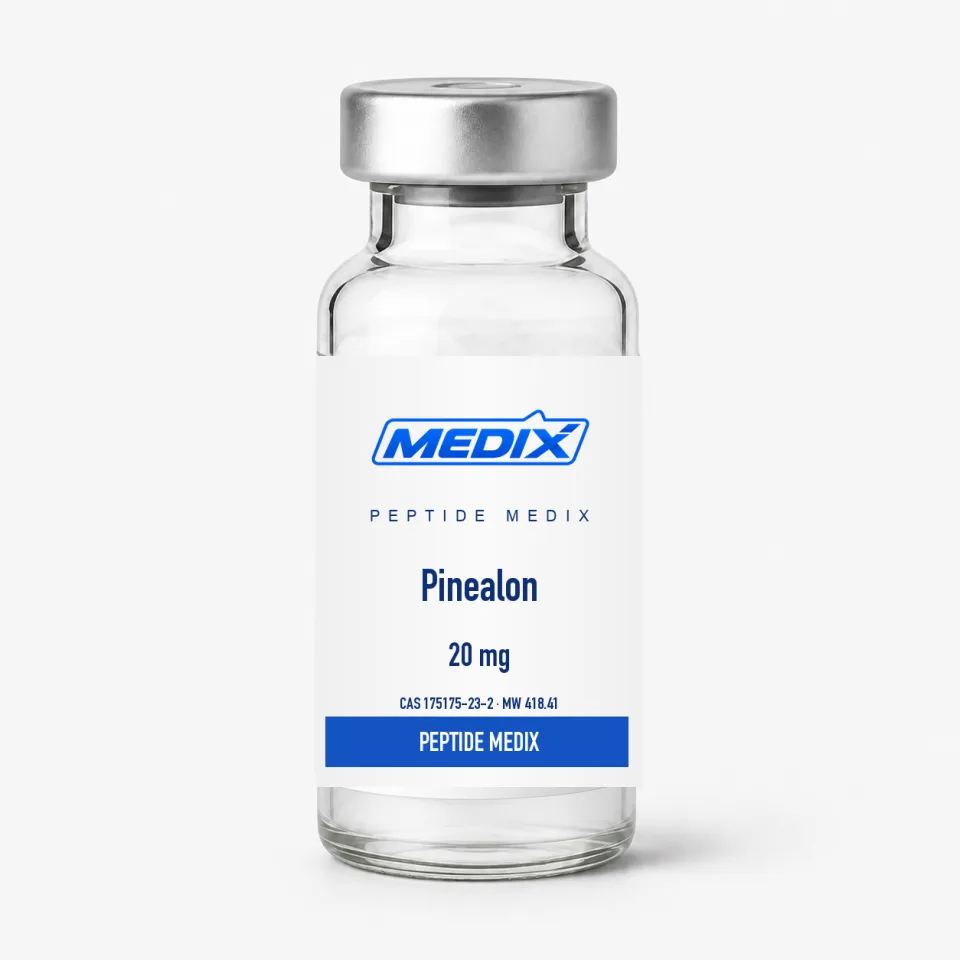
Pinealon – vial, 20 mg. Lyophilized powder in a sealed glass vial. Other Pinealon listings differ in format, fill or combination partners; the specification and COA always refer to the listing you order.
Same compound, other listings
Specifications
Identity
- CAS number
- 175175-23-2
- Molecular formula
- C15H26N6O8
- Molecular weight
- 418.41 g/mol
- Amino acid sequence
- Glu-Asp-Arg (EDR)
- Peptide class
- Khavinson short-peptide bioregulator (tripeptide)
Supply & purity
- Form
- Lyophilized powder in a sealed glass vial
- Purity
- ≥99% by HPLC; lot-matched COA available
- Available sizes
- 20 mg
- Solubility
- Bacteriostatic or sterile water; readily soluble in aqueous buffers
Handling & storage
- Storage (lyophilized)
- −20 °C, sealed and protected from light and moisture
- Storage (reconstituted)
- 2–8 °C, protected from light; use within the study window
Additional detail
- Tissue association
- Brain and pineal peptide preparations
- Research areas
- Neuronal survival, oxidative and hypoxic stress, chromatin and gene expression, ageing of nervous tissue
Questions about Pinealon
Is Pinealon's purity checked independently?
Yes. HPLC testing against a ≥99% purity specification is performed on every lot, and on request you receive the certificate for your exact batch, stating purity, identity confirmation and appearance.
Which size is offered?
A single 20 mg lyophilised vial — the standard research amount for this peptide series. The powder is vacuum-sealed in glass and dispatched in tamper-evident packaging from our EU warehouse.
How is Pinealon stored?
Keep unopened vials at −20 °C, shielded from light and humidity. Once reconstituted, refrigerate at 2–8 °C and use within the planned study period; freezing aliquots prevents repeated freeze–thaw cycles.
Which peptides is it typically compared with?
Labs often test Pinealon next to Epitalon, Cortagen and Vesugen: all four come from the same family of short peptides and are compared under identical assay conditions to look for effects specific to particular tissues.
What is it reconstituted in?
Usually bacteriostatic or sterile water, as the peptide dissolves readily in aqueous media. The buffer depends on the assay, so confirm compatibility and final pH for your own protocol.