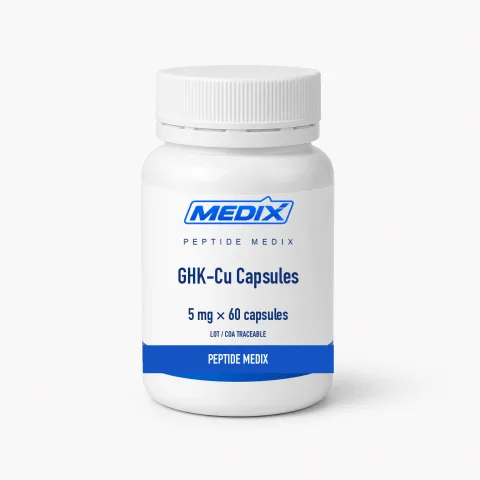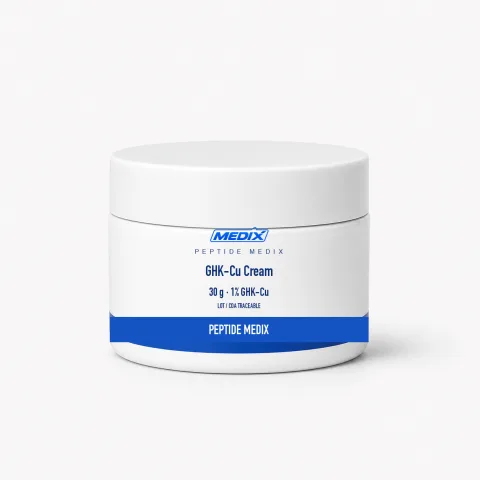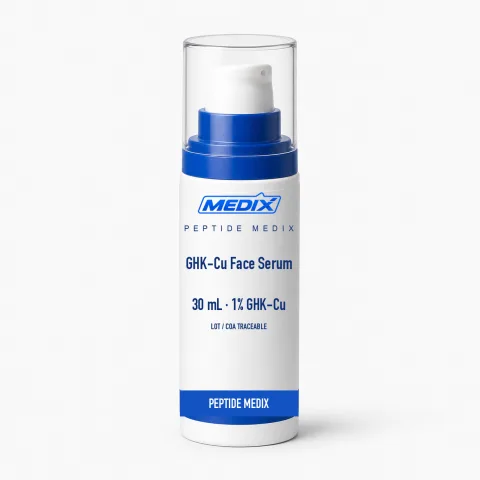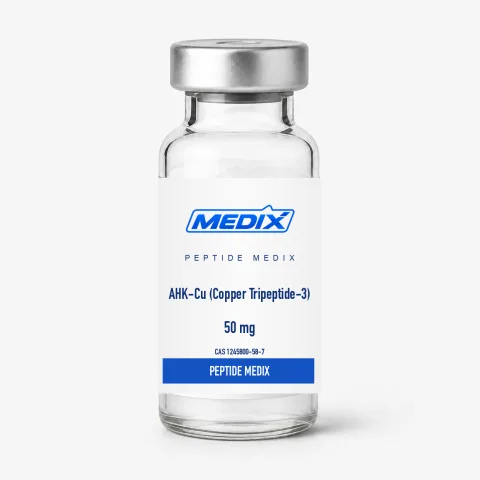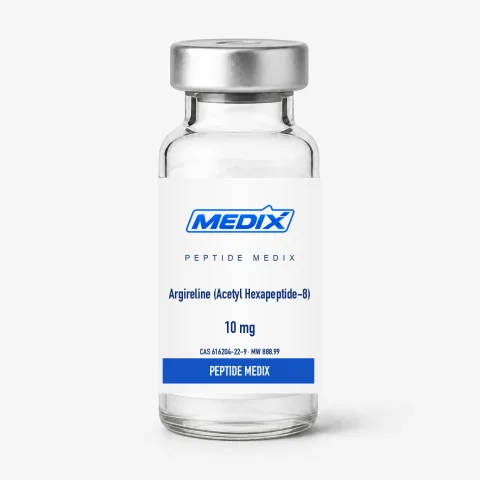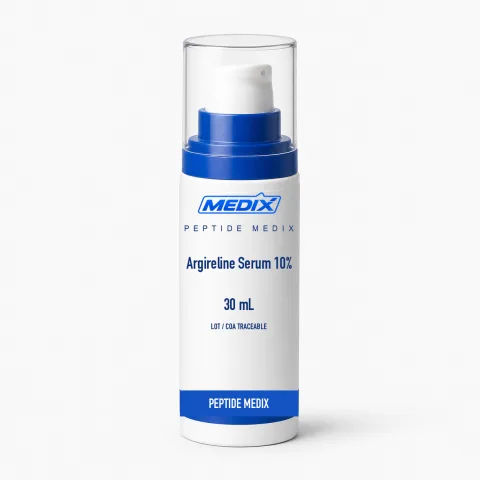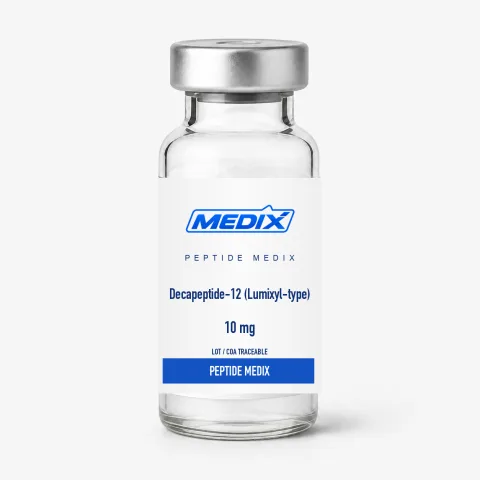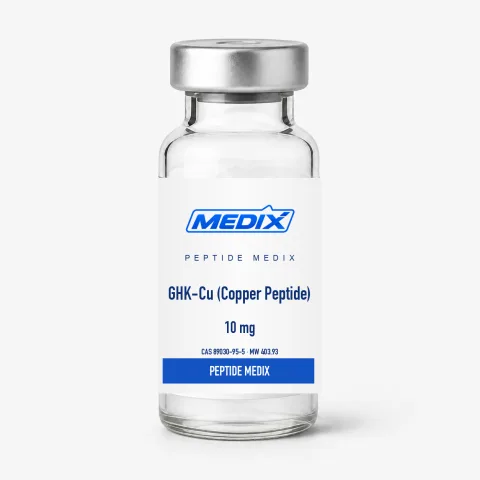
- HPLC-assayed purity of ≥99%
- Certificate of analysis tied to your lot number
- Tracked EU delivery, dispatched the next working day
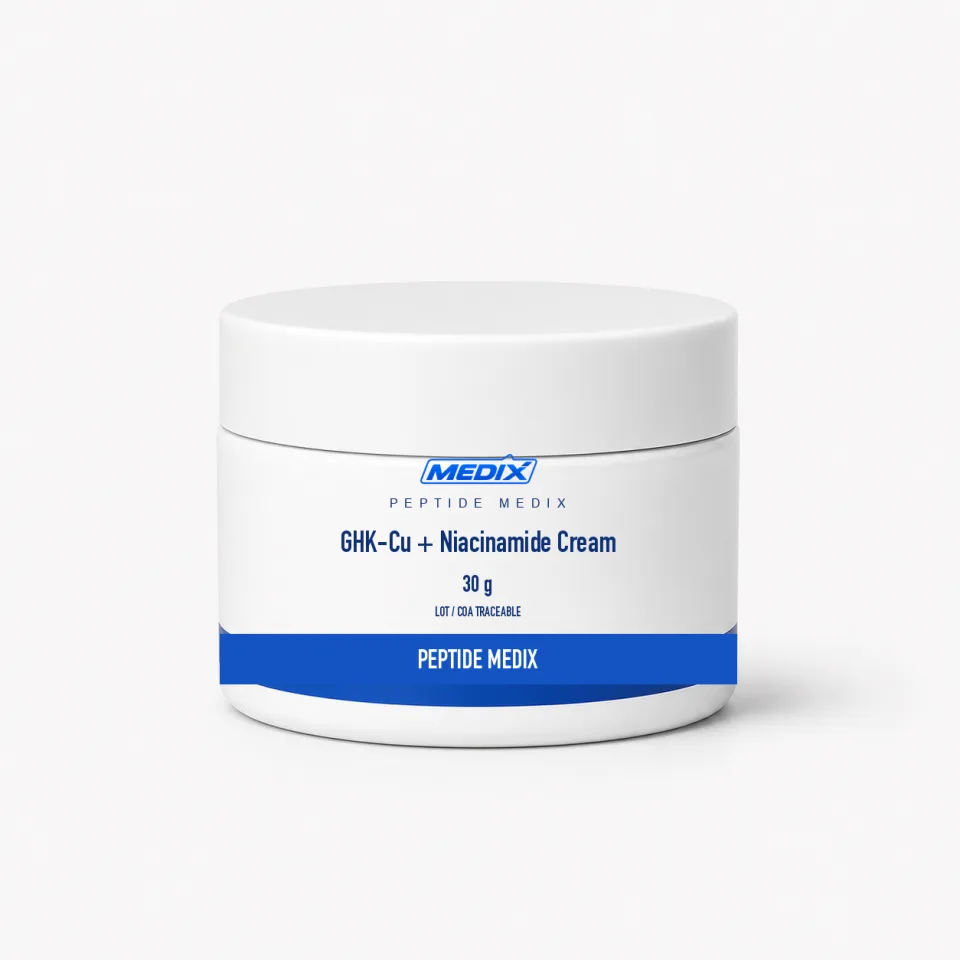
GHK-Cu + Niacinamide Cream
Copper tripeptide-1 with niacinamide in a rich cream — jars of 30 g and 50 g
In stock2 formats available
€46Range €46 – €68
This listing is currently unavailable. Contact us and we will tell you when it is back or suggest an equivalent.
Ask about this listing or request its COA- FormBlue-tinted emollient cream in a screw-top jar
- Research areasBarrier-lipid and keratinocyte models, ECM endpoints, combination-formulation stability
For laboratory research use only. Sold exclusively for in-vitro laboratory research by qualified professionals. Not for human or veterinary use, and not a medicine, food, cosmetic or dietary supplement. Terms and Conditions
Overview
Key facts
This cream brings together GHK-Cu — copper(II) held by the tripeptide glycyl-L-histidyl-L-lysine — and niacinamide, the amide form of vitamin B3, in a rich, skin-softening base; choose a jar of 30 g or 50 g.
- Form
- Blue-tinted emollient cream in a screw-top jar
- Storage
- Cool and dark, ideally 2–8 °C; keep the jar closed
- Available sizes
- 30 g · 50 g
For research use only. Not for human consumption.
This cream brings together GHK-Cu — copper(II) held by the tripeptide glycyl-L-histidyl-L-lysine — and niacinamide, the amide form of vitamin B3, in a rich, skin-softening base; choose a jar of 30 g or 50 g. The two come from separate research traditions. GHK-Cu works on the matrix side and is studied for how fibroblasts behave, how much collagen and glycosaminoglycan they produce, and for its copper-driven chemistry. Niacinamide is a small vitamin that dissolves very easily in water; it is investigated for the synthesis of barrier lipids, the maturation of keratinocytes, the transfer of pigment and its role as a building block for NAD.
Combining them makes the formulation an object of study in its own right. Niacinamide is used at much higher percentages than peptide actives, can hydrolyse into nicotinic acid when the pH is unfavourable, and the pH range that keeps it stable does not necessarily suit a copper complex. Such combination creams are therefore assessed for the stability of each active, their interaction with the emulsion phases and any influence on the delivery of the partner ingredient.
The peptide input is tested by an independent lab to ≥99% HPLC purity, with a certificate of analysis for the lot. Jars carry lot numbers and are filled and dispatched from our EU warehouse for laboratory research only.
What sets this listing apart
GHK-Cu + Niacinamide Cream – cream/serum, 30/50 g. Blue-tinted emollient cream in a screw-top jar. Other GHK-Cu listings differ in format, fill or combination partners; the specification and COA always refer to the listing you order.
Same compound, other listings
Specifications
Supply & purity
- Form
- Blue-tinted emollient cream in a screw-top jar
- Available sizes
- 30 g, 50 g
Additional detail
- Active 1
- GHK-Cu — copper(II) complex of glycyl-L-histidyl-L-lysine (INCI copper tripeptide-1)
- Active 1 identifiers
- CAS 89030-95-5 · C14H24N6O4·Cu · 403.93 g/mol
- Active 2
- Niacinamide (nicotinamide, vitamin B3)
- Active 2 identifiers
- CAS 98-92-0 · C6H6N2O · 122.12 g/mol
- Concentrations
- Printed on the lot label for each active
- Peptide purity input
- ≥99% by HPLC; lot-matched COA available
- Vehicle
- Emollient oil-in-water cream base, no added fragrance
- Research areas
- Barrier-lipid and keratinocyte models, ECM endpoints, combination-formulation stability
- Storage
- Cool and dark, ideally 2–8 °C; keep the jar closed
- Compatibility note
- Niacinamide can hydrolyse to nicotinic acid at unfavourable pH; reducing agents disturb copper coordination
Questions about GHK-Cu + Niacinamide Cream
What is in the cream?
Two active ingredients in a rich cream base: GHK-Cu (copper(II) bound to glycyl-histidyl-lysine) and niacinamide (vitamin B3 in amide form). How much of each is present is printed on the lot label. The 30 g and 50 g jars contain the same cream in different amounts.
What is the point of combining a copper peptide with niacinamide?
Each covers a different part of the literature: GHK-Cu dermal-matrix endpoints, niacinamide keratinocyte and barrier-lipid endpoints. A combined formula lets a study test whether both shift together and whether one alters delivery of the other.
Is the GHK-Cu input tested, and can I get its COA?
Yes — it is released only after meeting a ≥99% HPLC purity specification and passing a mass-spectrometric identity check, and the certificate for that raw-material lot is available on request. The lot number printed on every jar ties your bench notes to it.
Do the two actives stay stable together?
That is one of the things this format is used to investigate. Niacinamide hydrolyses to nicotinic acid under heat or at an unsuitable pH, while copper binding reacts to pH and competing ligands. Stability studies should measure each active on its own rather than assume the combination behaves like either alone.
What control should a combination experiment use?
A preparation with just one active in a similar base. Our GHK-Cu cream contains peptide to the identical specification in a comparable rich base, so testing it next to this jar shows what the niacinamide adds, without differences in the base muddying the picture.
How should the jars be stored?
Keep the lid on, store somewhere cool and dark — ideally at 2–8 °C — and away from heat. Use clean tools to take samples and note the lot and the date you opened it. If the blue colour fades or changes, the copper complex has been disturbed, so don't use that jar for quantitative work any more.
Related