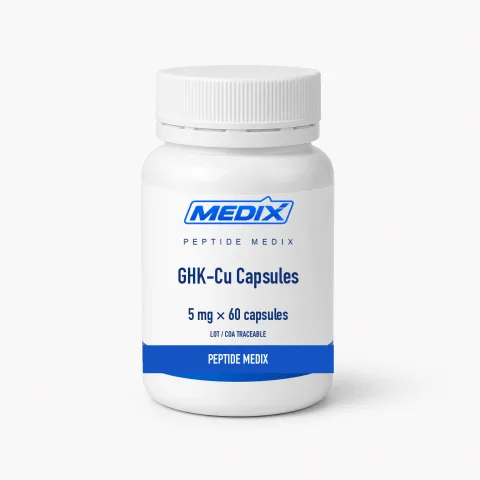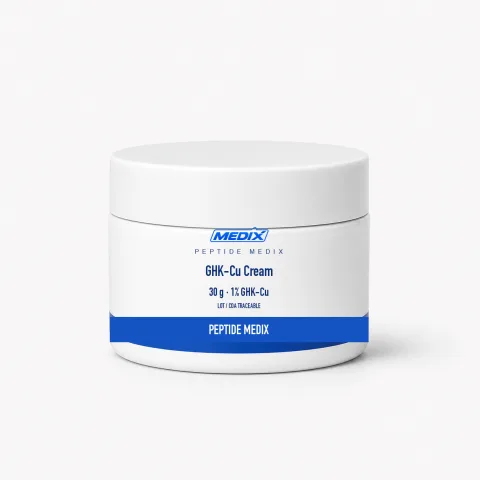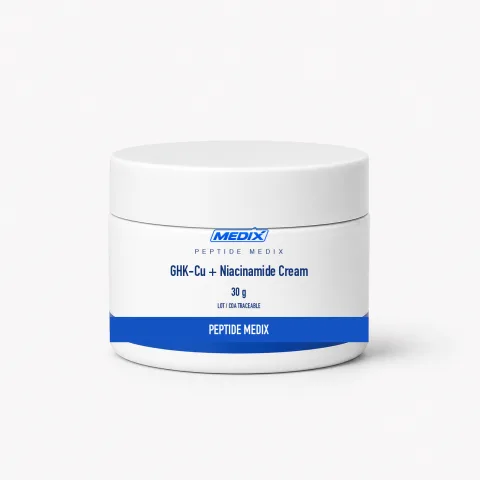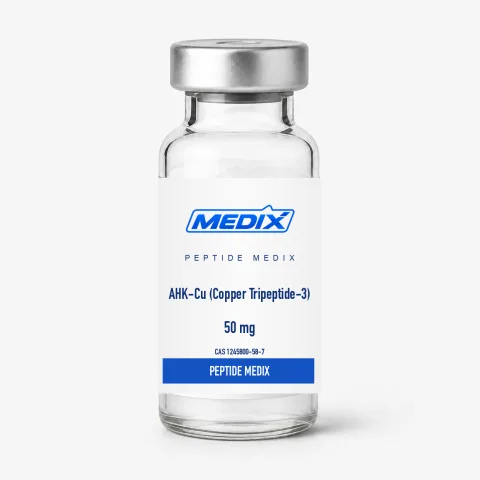
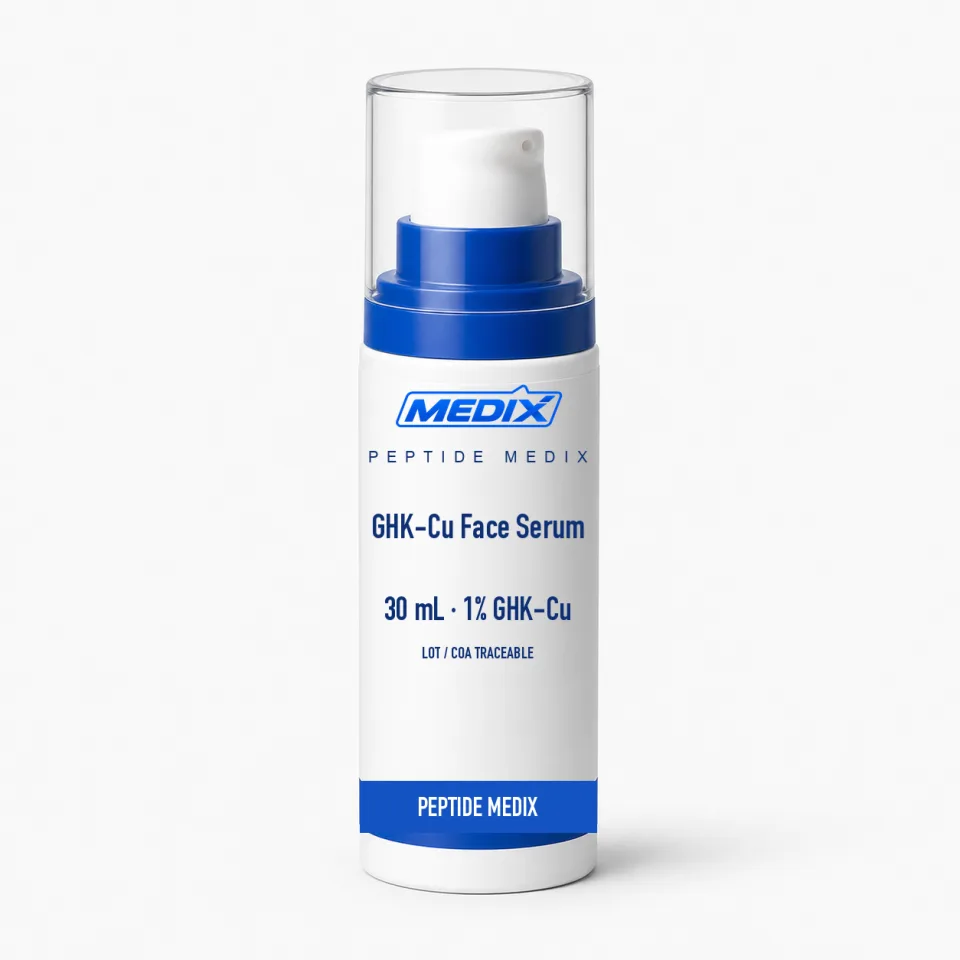
- HPLC-assayed purity of ≥99%
- Certificate of analysis tied to your lot number
- Tracked EU delivery, dispatched the next working day
GHK-Cu Face Serum
Water-based copper tripeptide-1 serum — 1% or 3% GHK-Cu, 30 mL bottle
In stock2 formats available
€68Range €68 – €110
This listing is currently unavailable. Contact us and we will tell you when it is back or suggest an equivalent.
Ask about this listing or request its COA- FormClear blue aqueous serum in a 30 mL bottle
- Research areasFibroblast and ECM studies, copper-peptide chemistry, permeation and vehicle work
For laboratory research use only. Sold exclusively for in-vitro laboratory research by qualified professionals. Not for human or veterinary use, and not a medicine, food, cosmetic or dietary supplement. Terms and Conditions
Overview
Key facts
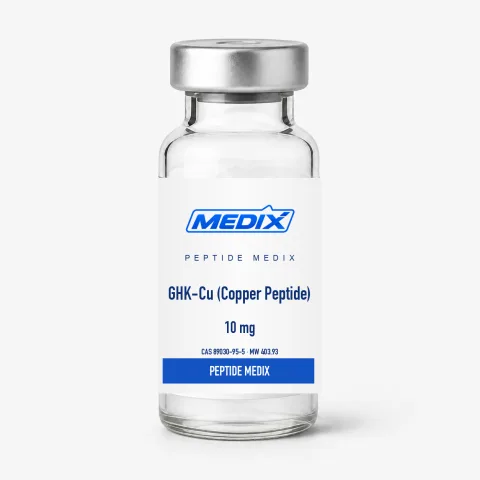
A light, water-based serum built on GHK-Cu: copper(II) held by the tripeptide glycyl-L-histidyl-L-lysine.
- CAS number
- 89030-95-5
- Molecular formula
- C14H24N6O4·Cu
- Molecular weight
- 403.93 g/mol
- Form
- Clear blue aqueous serum in a 30 mL bottle
- Storage
- 2–8 °C preferred, protected from light; keep the closure tight
- Available sizes
- 30 mL · 1-pack · 30 mL · 3-pack
For research use only. Not for human consumption.
A light, water-based serum built on GHK-Cu: copper(II) held by the tripeptide glycyl-L-histidyl-L-lysine. Scientists first described GHK in human plasma in the early 1970s, recognising it as a stretch matching part of the albumin sequence; its strong pull on copper is what turns the complex a deep blue and what makes it so interesting to researchers. Reports that circulating GHK declines with age help explain why skin and matrix biologists have investigated it so extensively.
An independent laboratory confirms ≥99% HPLC purity for the peptide inputs, and each lot comes with its own certificate of analysis. Made and dispatched from our EU warehouse, strictly for laboratory research.
What sets this listing apart
GHK-Cu Face Serum – cream/serum, 30 mL. Clear blue aqueous serum in a 30 mL bottle. Other GHK-Cu listings differ in format, fill or combination partners; the specification and COA always refer to the listing you order.
Same compound, other listings
Specifications
Supply & purity
- Form
- Clear blue aqueous serum in a 30 mL bottle
Additional detail
- Available strengths
- 30 mL · 1% GHK-Cu (10 mg/mL); 30 mL · 3% GHK-Cu (30 mg/mL)
- Active
- GHK-Cu, copper(II) complex of glycyl-L-histidyl-L-lysine
- INCI name of active
- Copper Tripeptide-1
- Peptide sequence
- Gly-His-Lys, coordinated to Cu(II)
- CAS number (active)
- 89030-95-5
- Molecular formula (active)
- C14H24N6O4·Cu
- Molecular weight (active)
- 403.93 g/mol
- Peptide purity input
- ≥99% by HPLC; lot-matched COA available
- Vehicle
- Aqueous, low-viscosity, no added fragrance or colourant
- Research areas
- Fibroblast and ECM studies, copper-peptide chemistry, permeation and vehicle work
- Storage
- 2–8 °C preferred, protected from light; keep the closure tight
- Compatibility note
- Strong reducing agents such as ascorbic acid can disturb copper coordination
Questions about GHK-Cu Face Serum
What does the serum contain?
Its sole active is GHK-Cu — glycyl-histidyl-lysine complexed with copper(II) — in a light aqueous base without fragrance or colourant. Two strengths share the same vehicle in a 30 mL bottle: 1% (10 mg/mL) and 3% (30 mg/mL).
Has the peptide in the serum been tested, and is there a COA?
Yes. Our GHK-Cu raw material only goes into production once it meets a ≥99% HPLC specification and its identity has been verified by mass spectrometry; ask us for that lot's certificate whenever you need it. Each bottle's own lot number links your notebook entries to it.
What makes the serum blue?
Copper(II) bound to the tripeptide. When the complex is intact the colour is a deep blue, which gives a fast visual check. A greenish drift or fading points to disruption by reducing agents, rival chelators or an unsuitable pH.
How do I store it?
Preferably refrigerated (2–8 °C), cap screwed tight, out of the light. Don't dip used applicators into the bottle, and note the opening date next to the lot number so your records remain traceable.
Serum or lyophilised powder — which should I use?
Powder lets you design your own vehicle at any concentration; the serum is a finished aqueous formulation at two set strengths. Groups studying formulations or skin models tend to choose the serum, whereas those characterising the complex itself usually begin with powder.
Related